
Printable Multiplication Charts& Tables Collection
Professionally designed, print-ready multiplication charts. Choose a template, customize it, and download instantly — no signup needed.
Classic Charts
Clean black-and-white multiplication charts that print perfectly on any printer. Ideal for homework, binders, and classroom handouts.
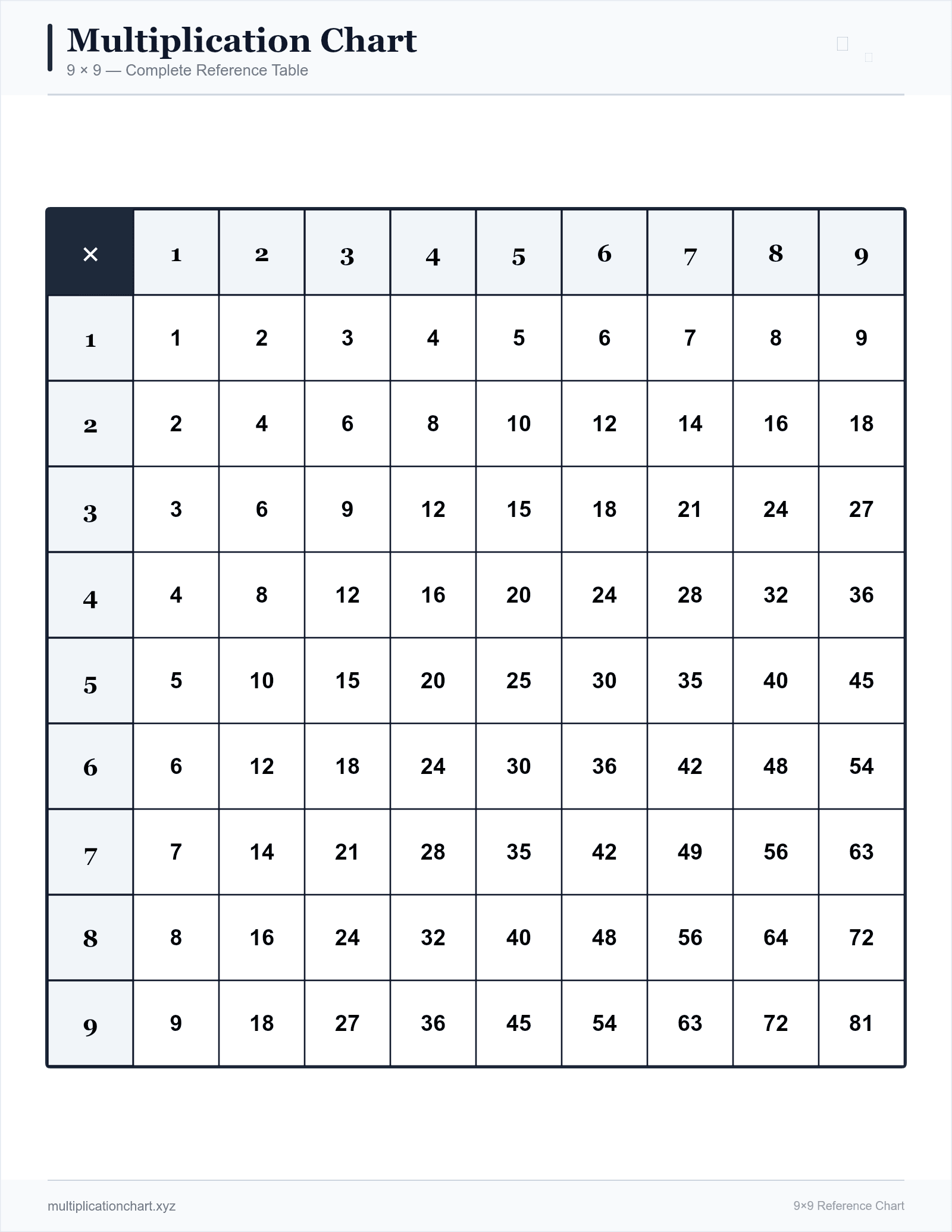
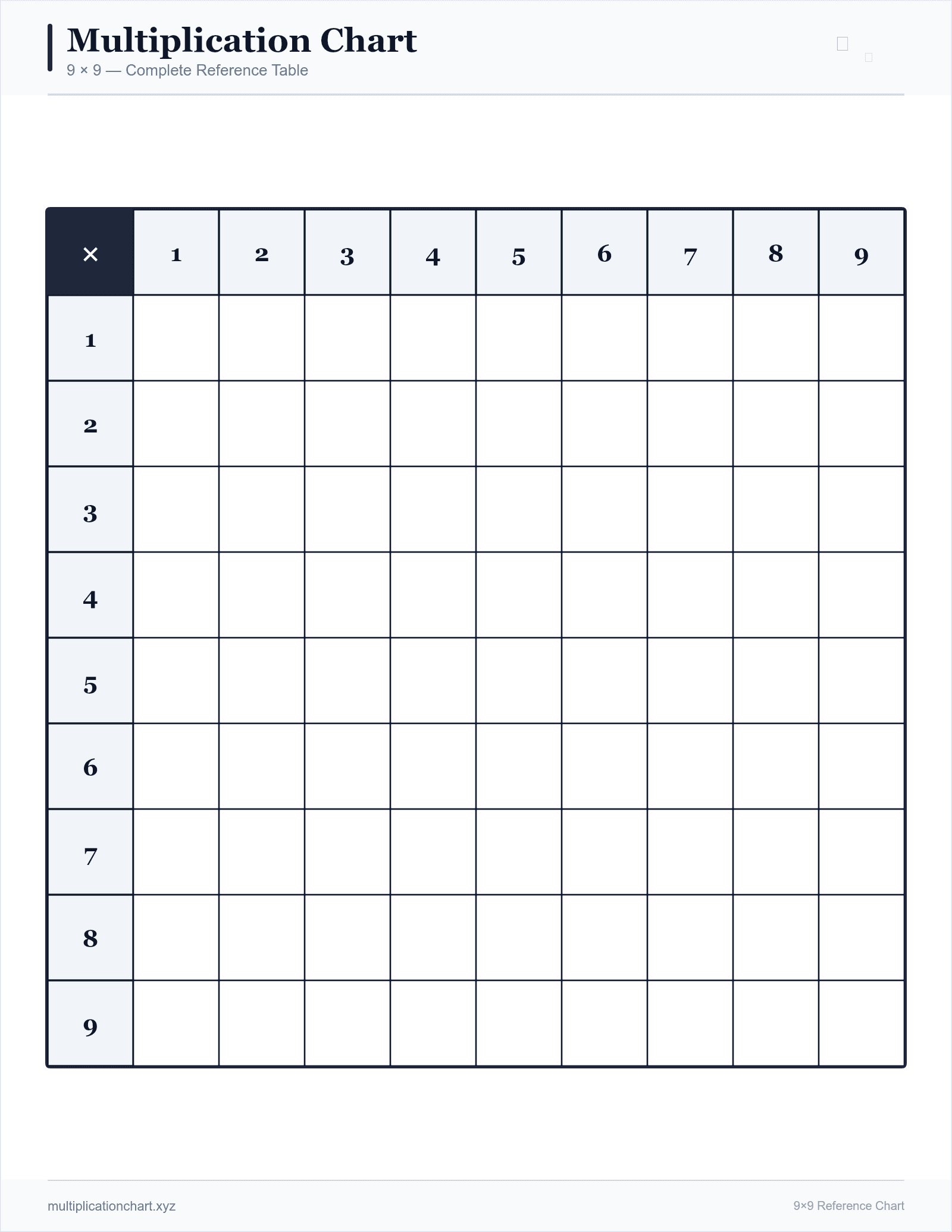
Basic 9×9 multiplication chart in classic black and white, perfect for beginners
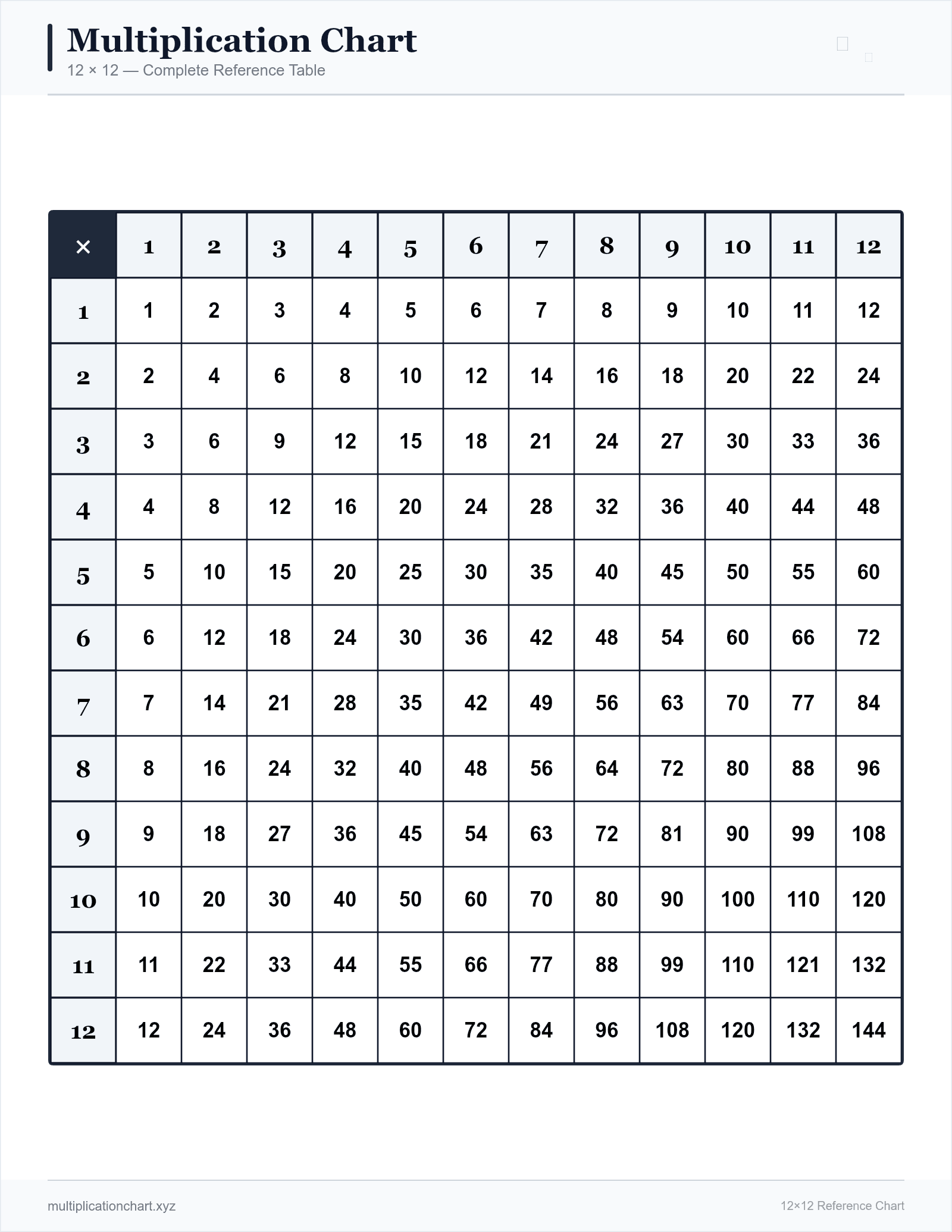
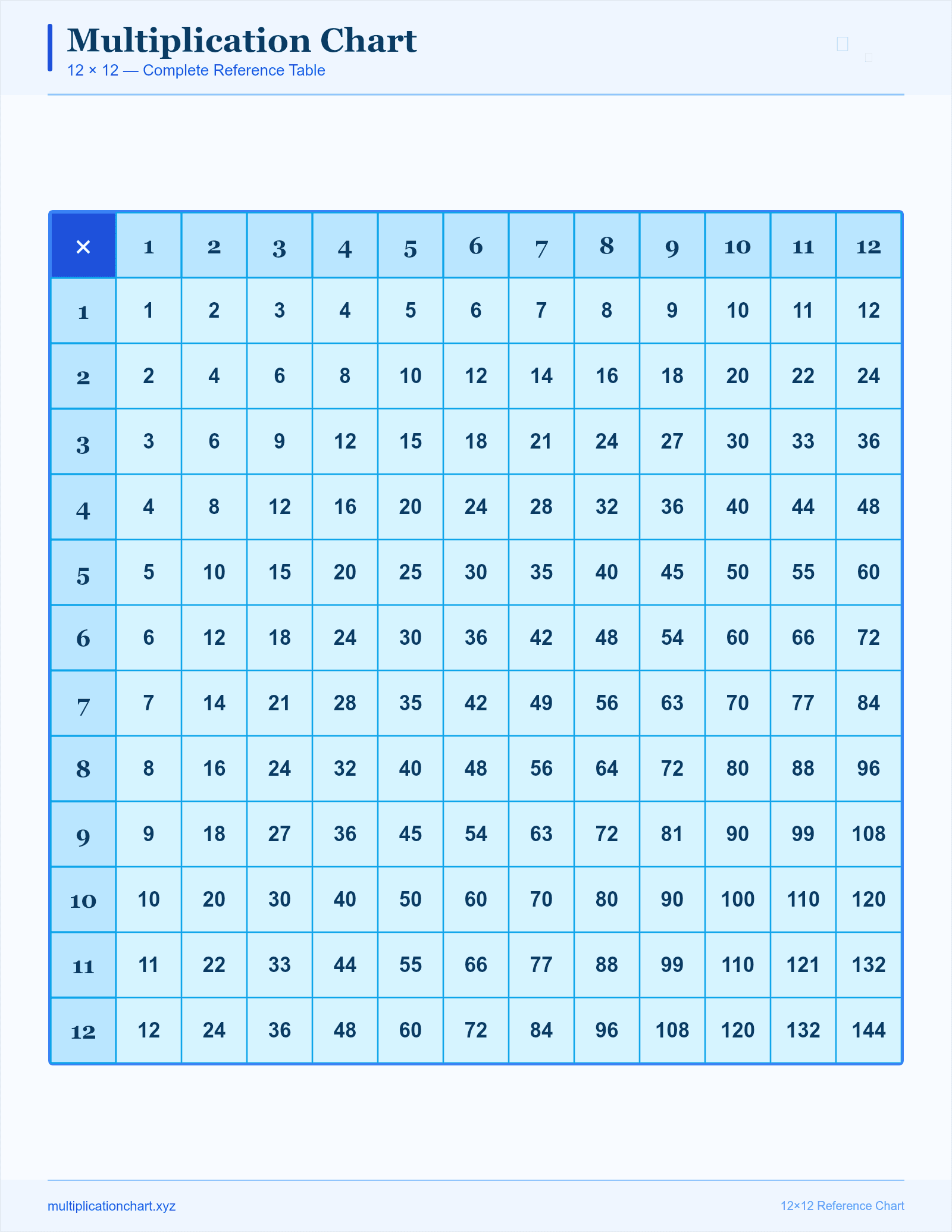
Classic Black & White 12×12
PopularStandard 12×12 multiplication chart in classic black and white, perfect for any printer
Colorful Charts
Vibrant, color-coded multiplication tables that help students spot patterns and stay engaged during practice.
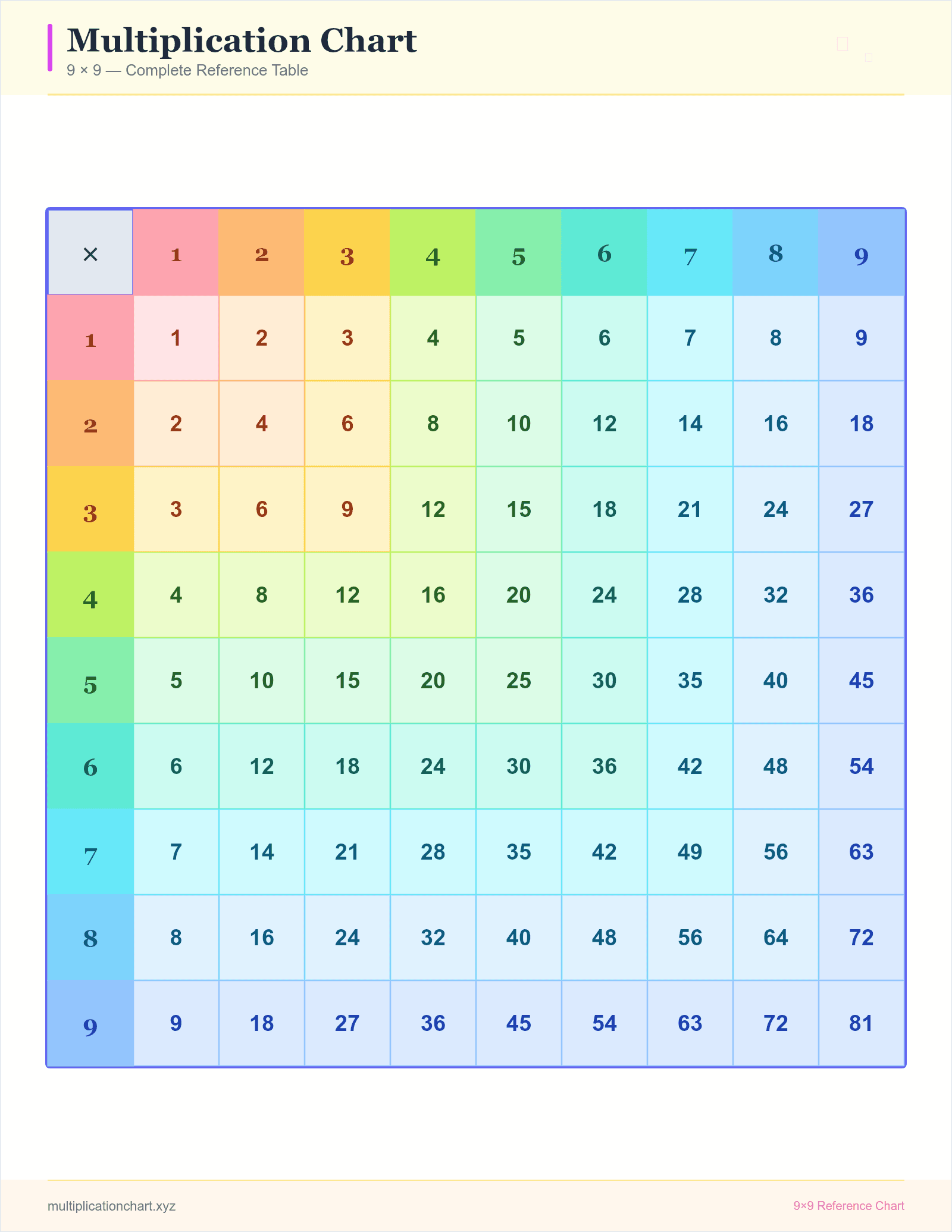
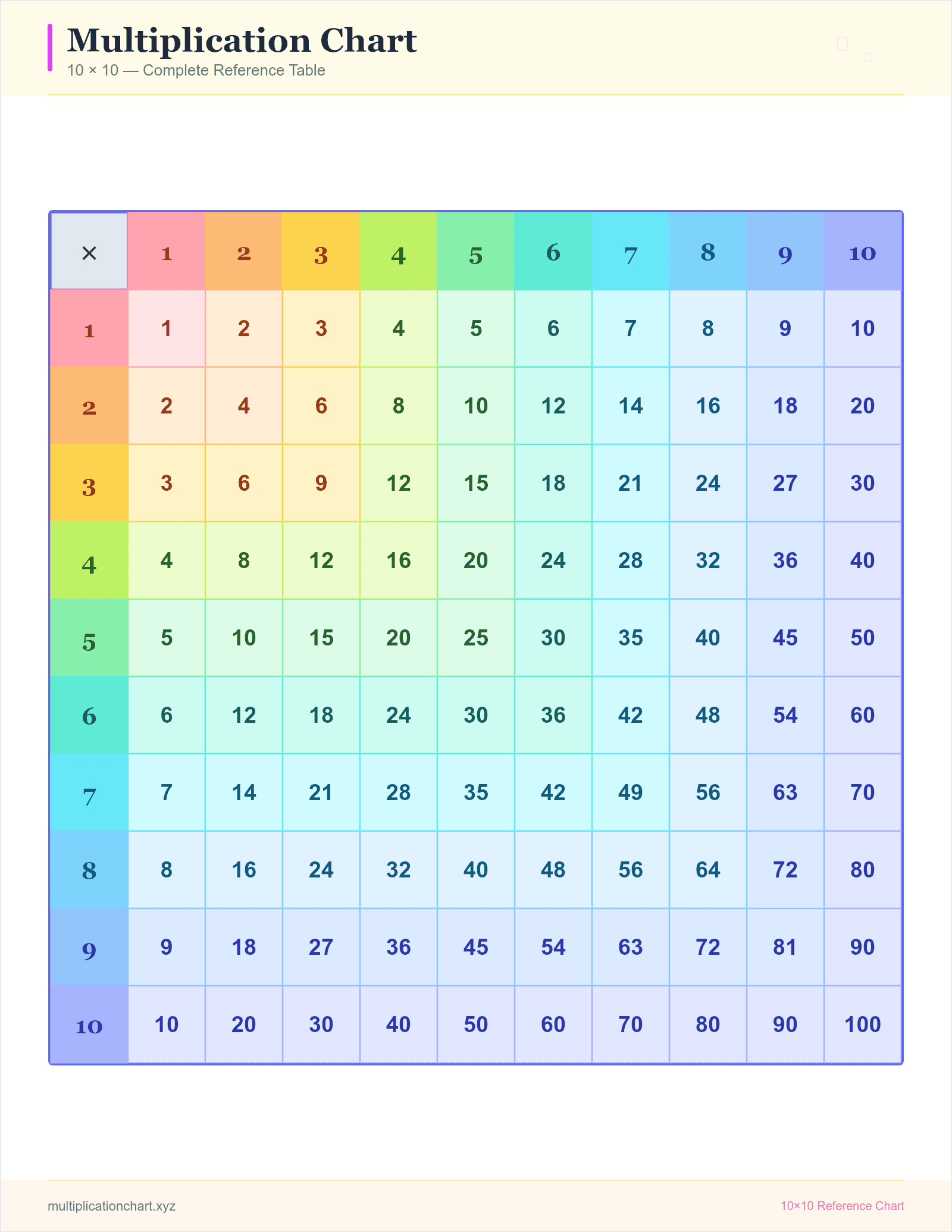
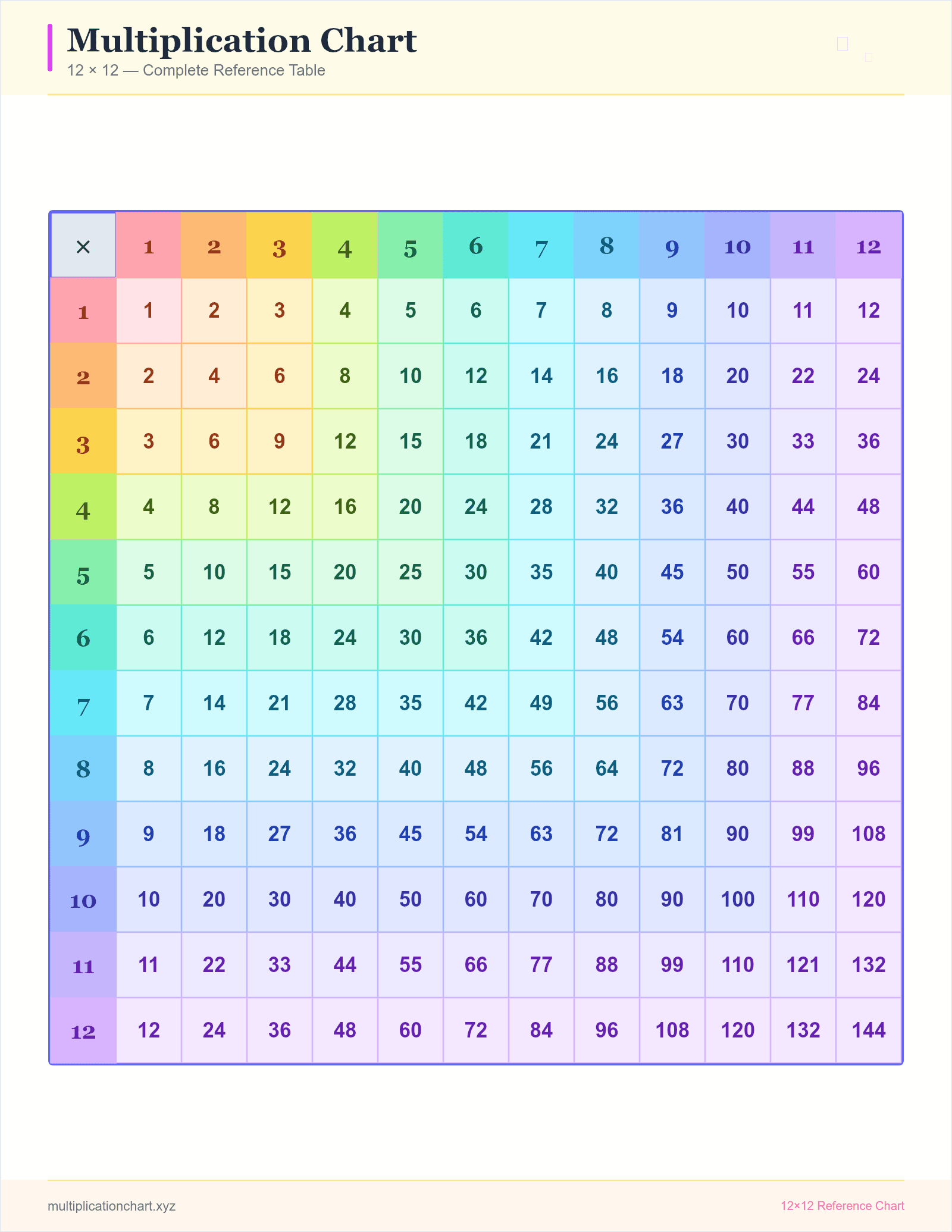
Rainbow 12×12
Best SellerMost popular colorful multiplication chart with rainbow theme, perfect for classroom display
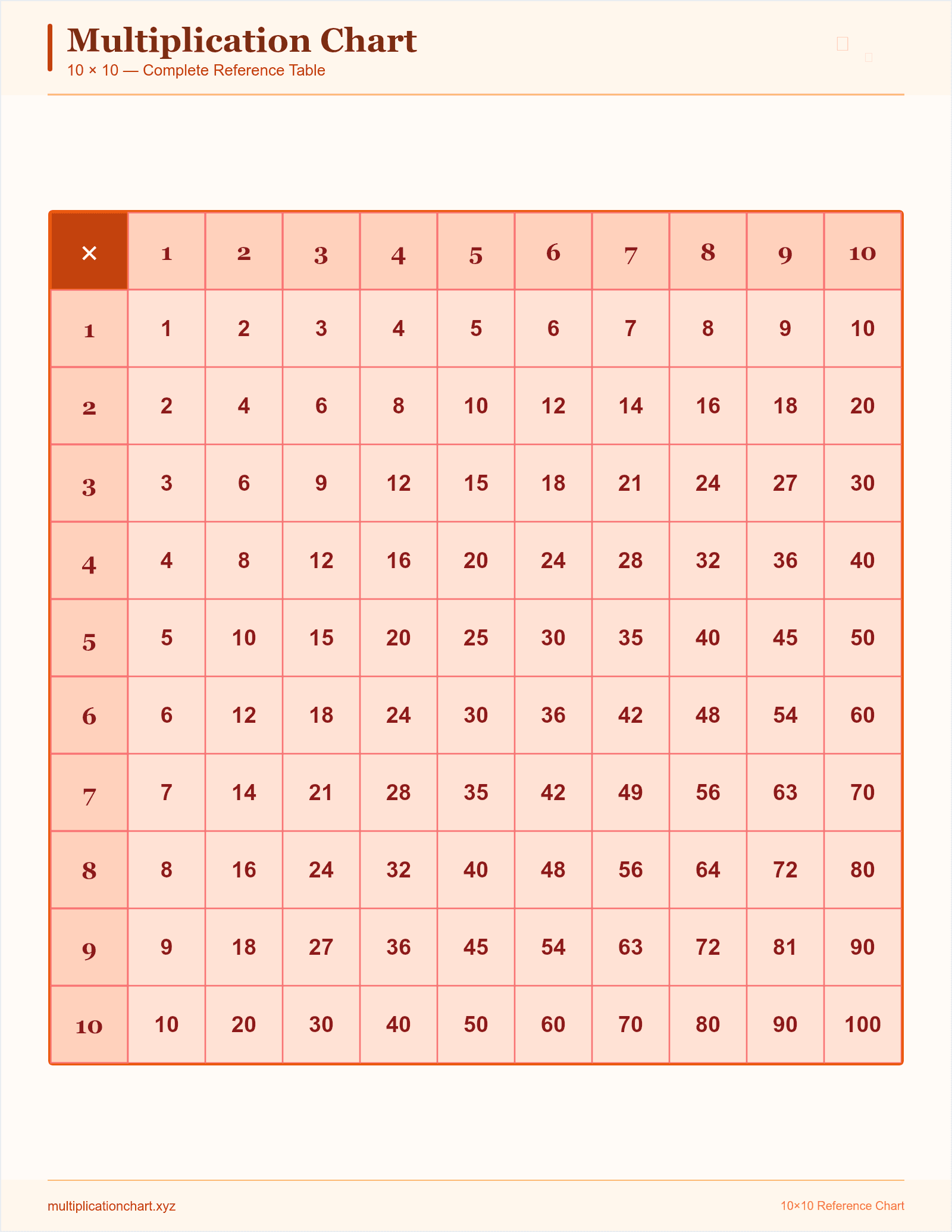
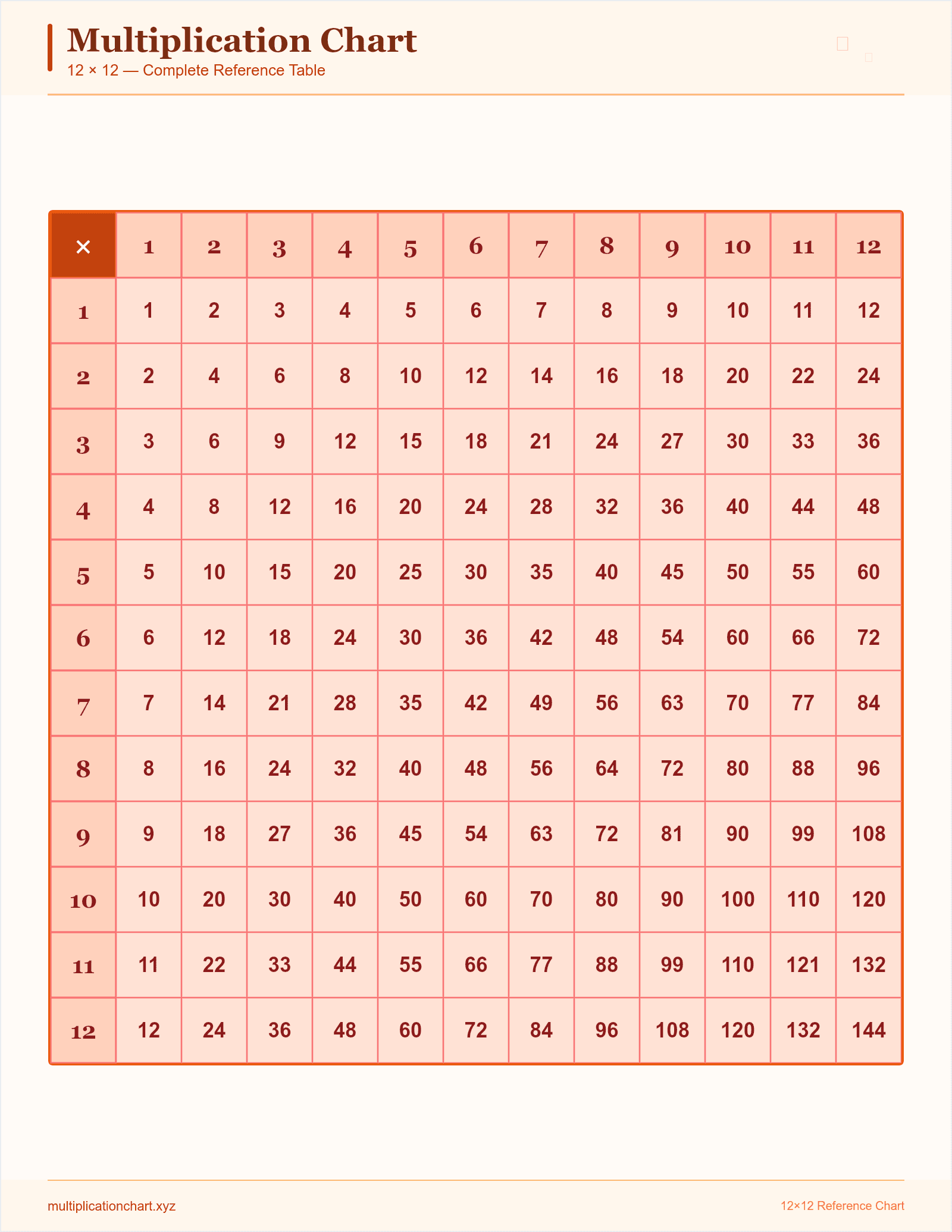
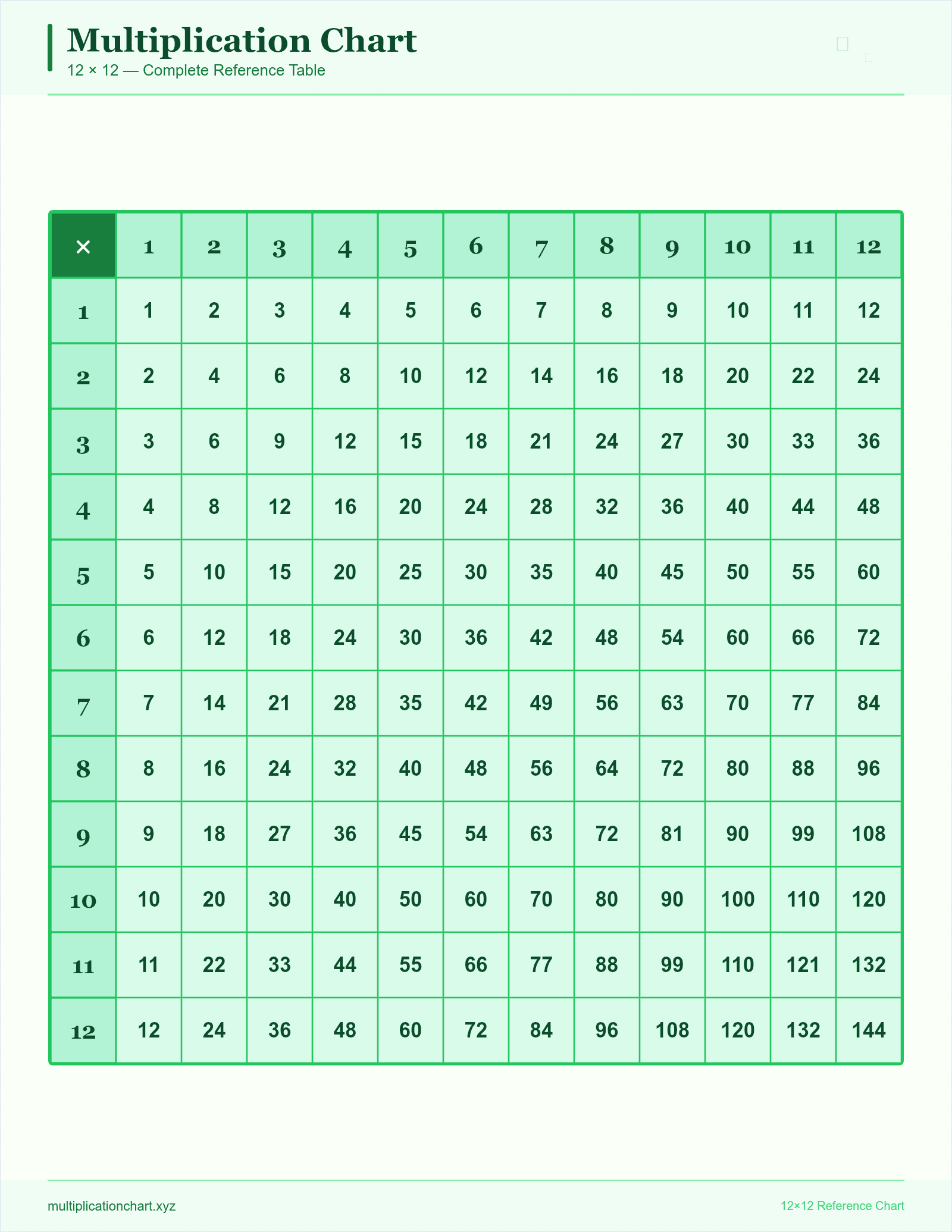
Practice Worksheets
Blank templates and randomized fill-in sheets for quizzes, timed drills, and self-paced multiplication practice.
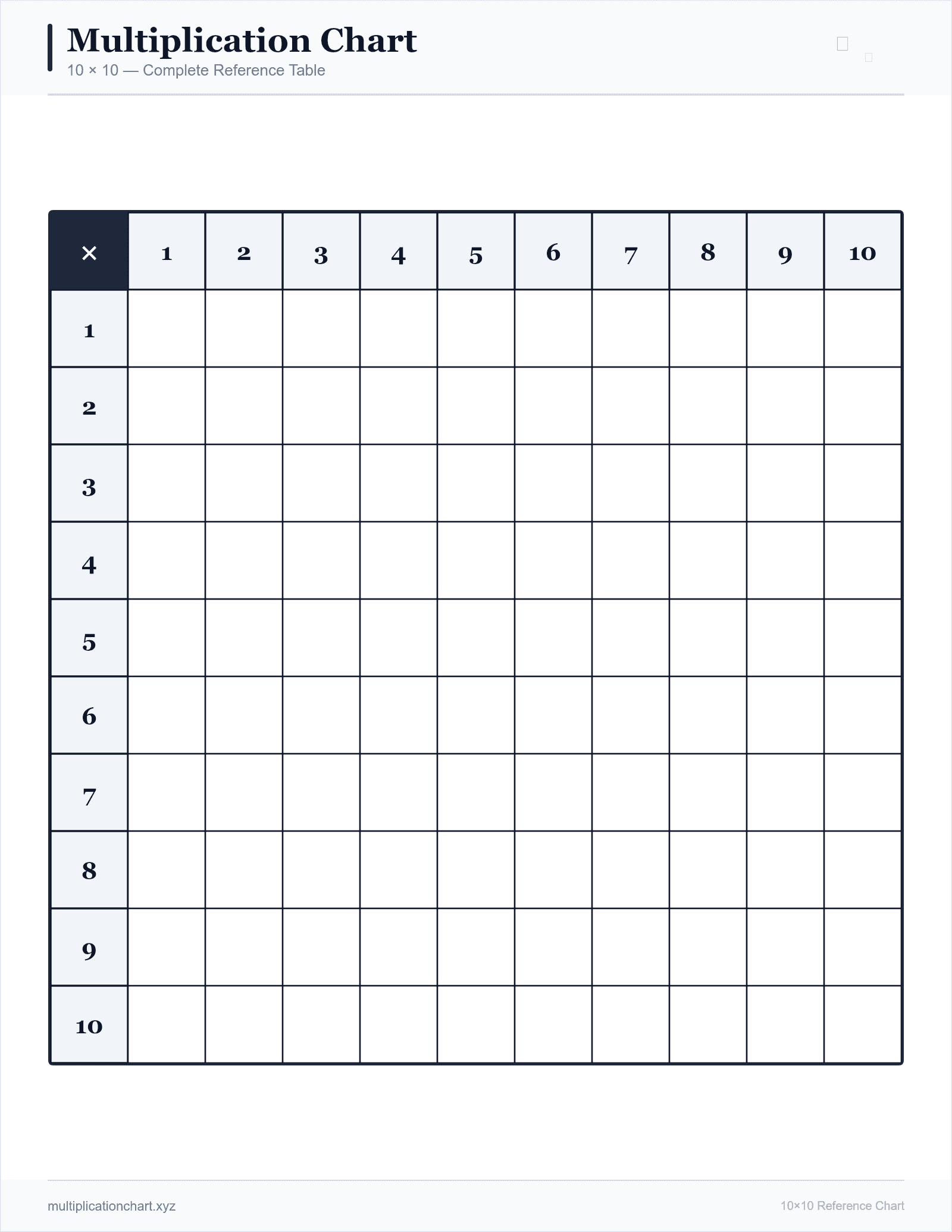
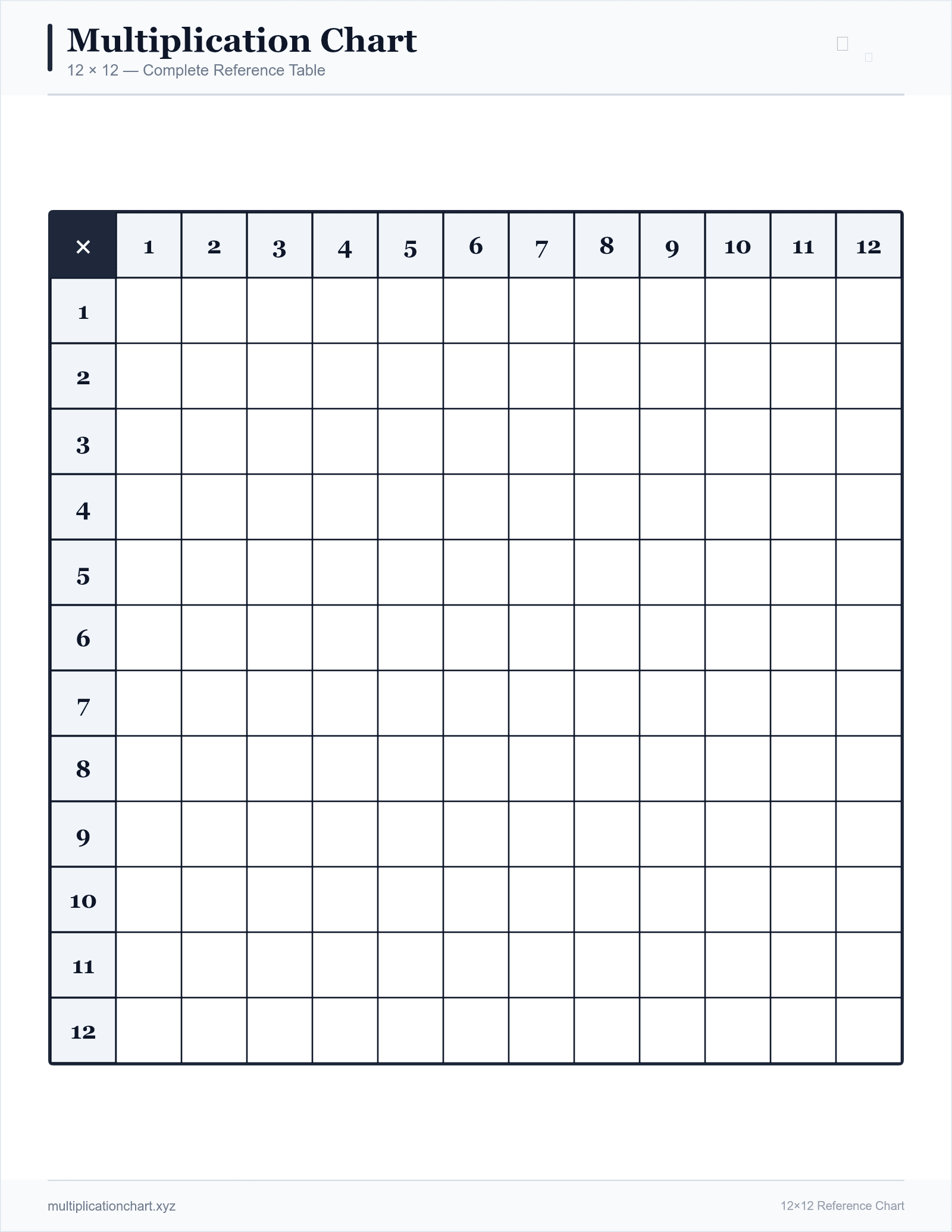
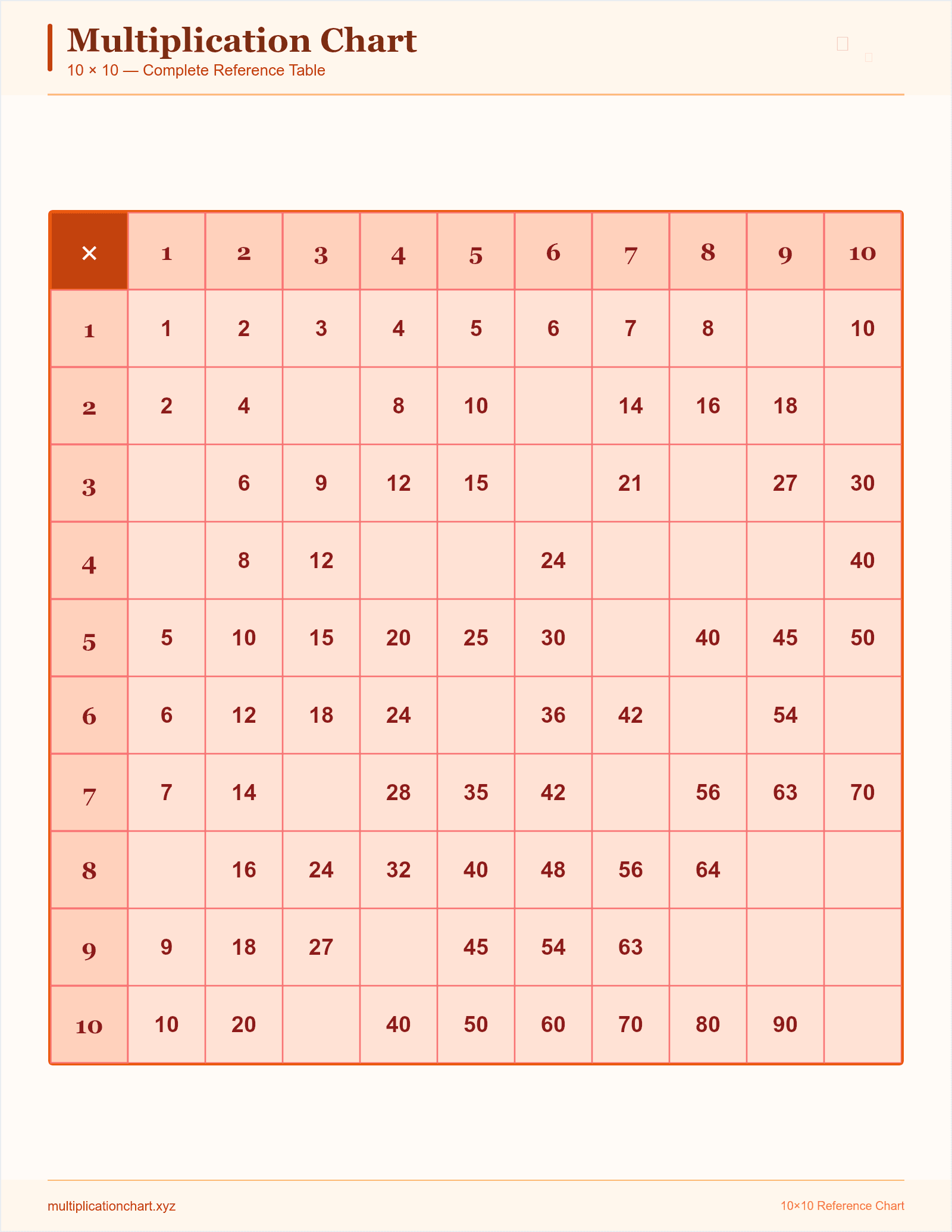
Partially filled chart with warm colors - some cells are blank for practice
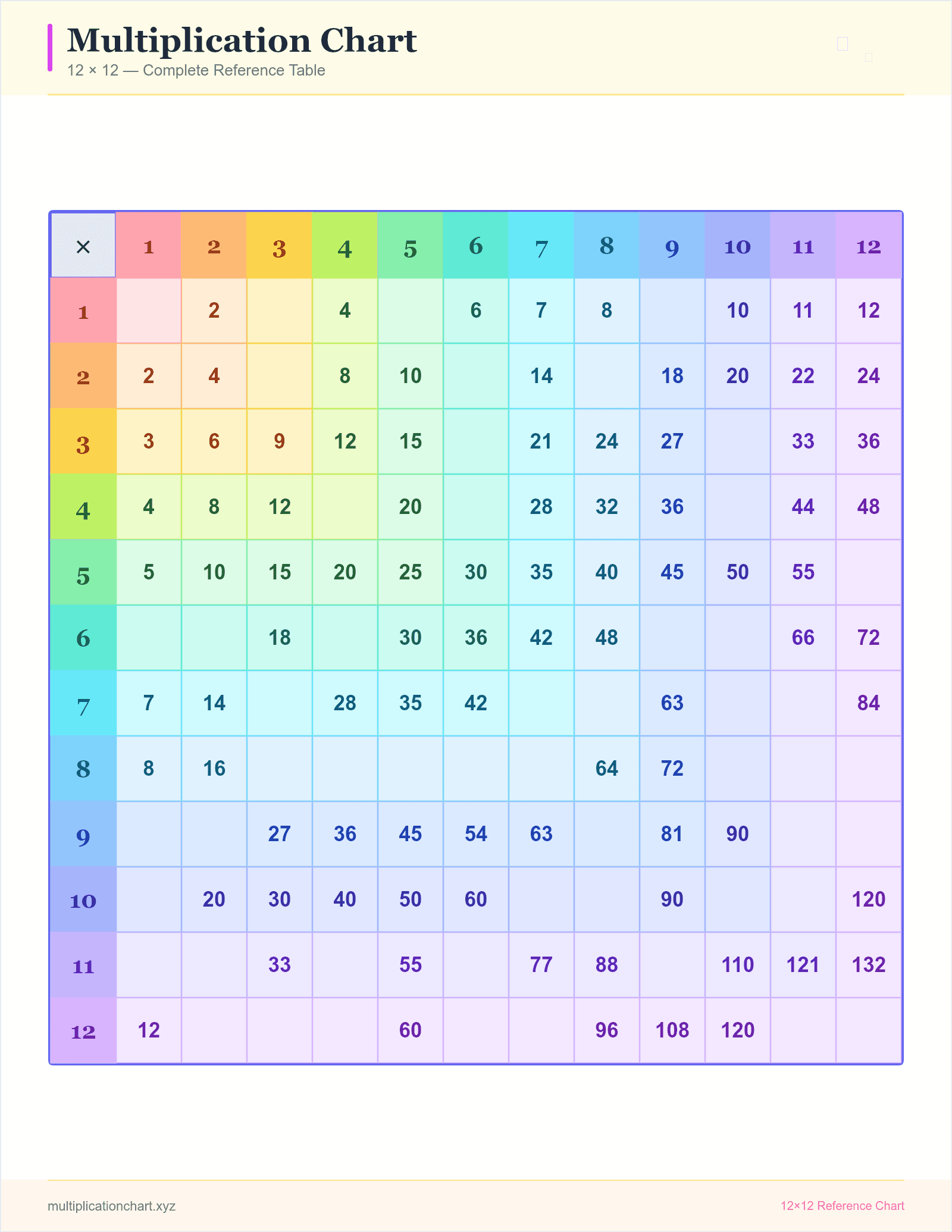
Engaging rainbow-themed partial chart perfect for self-paced learning
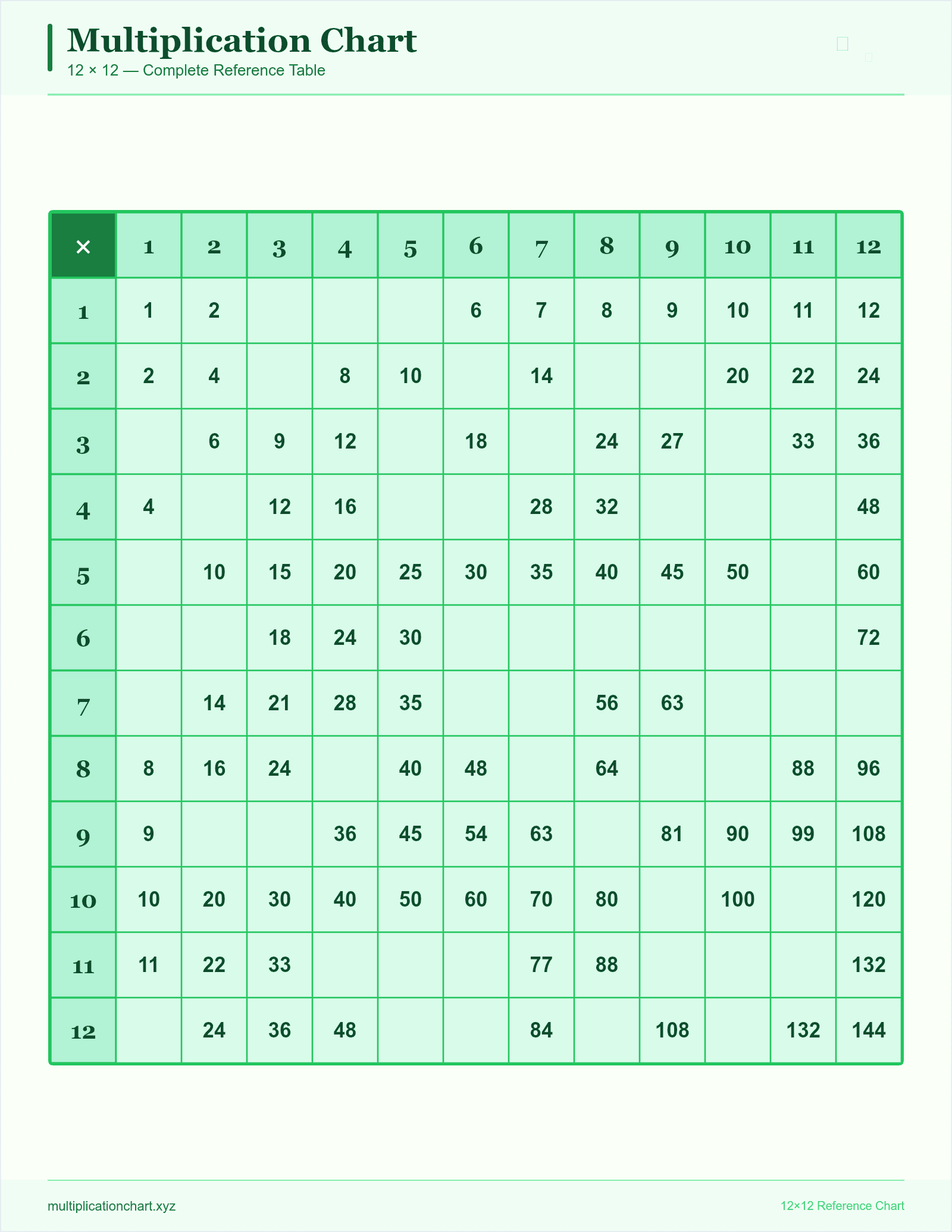
Calming forest green partial chart for focused practice sessions
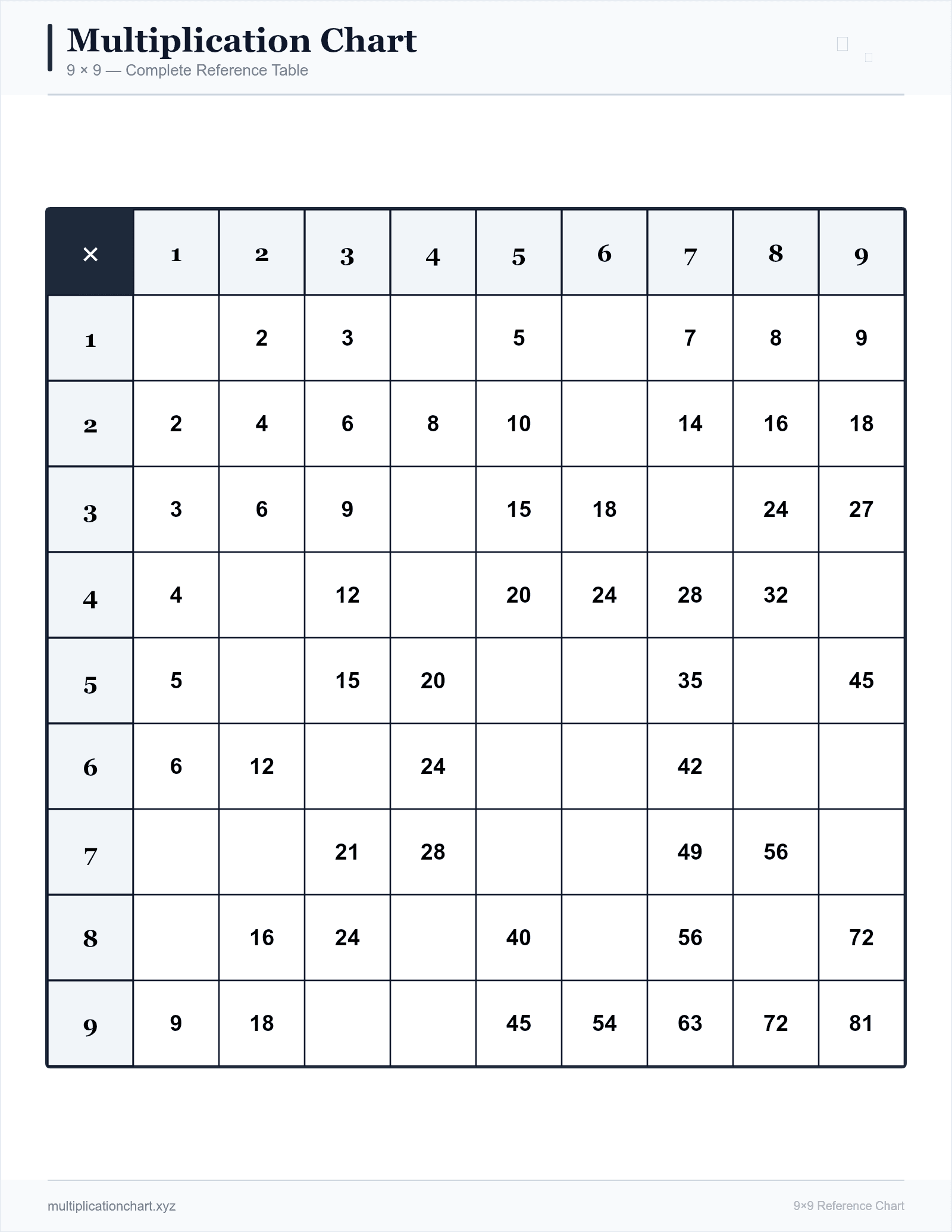
Classic monochrome grid with scattered blanks for early multiplication drills
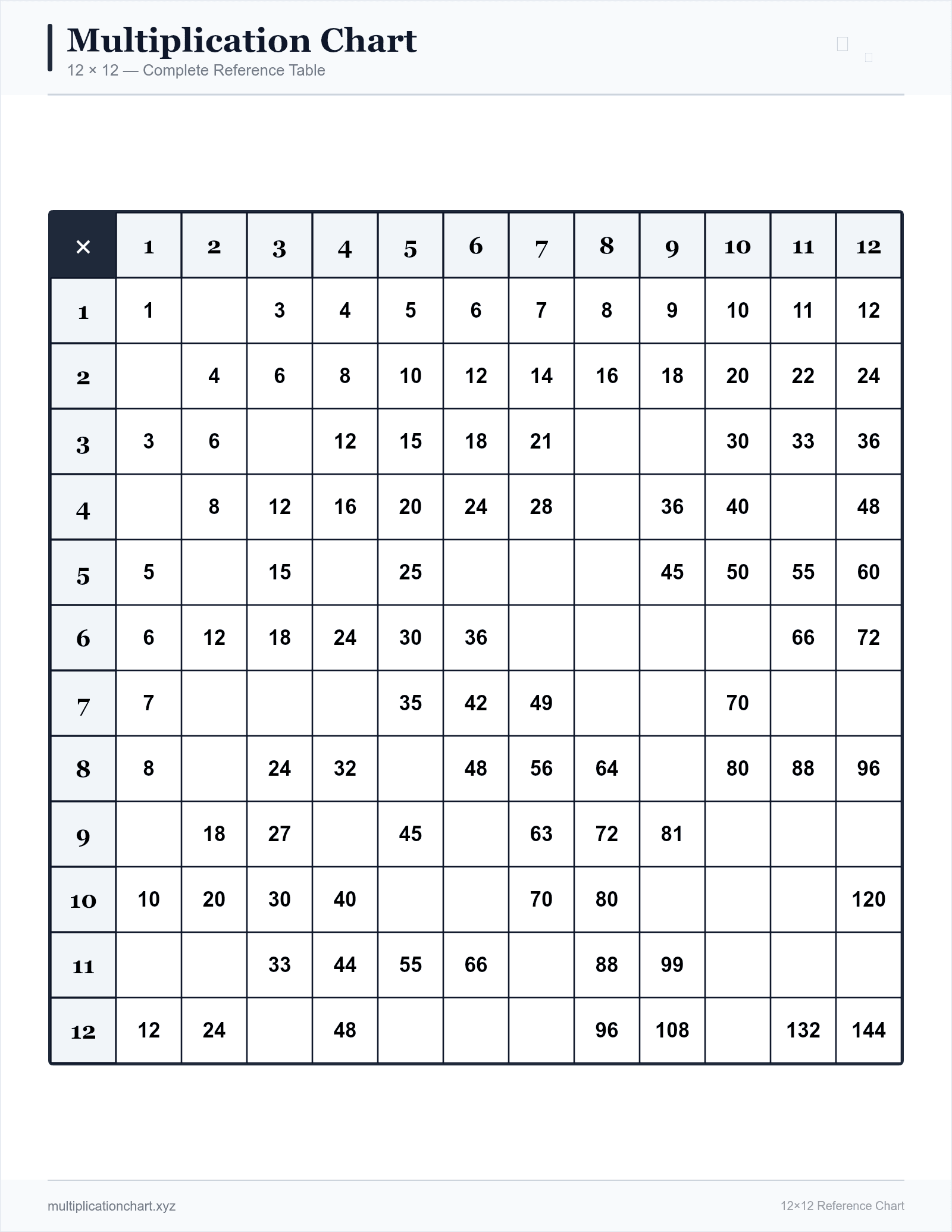
Random Fill Practice 12×12 (Classic)
AssessmentStandard black-and-white 12×12 sheet with strategic blanks for quizzes
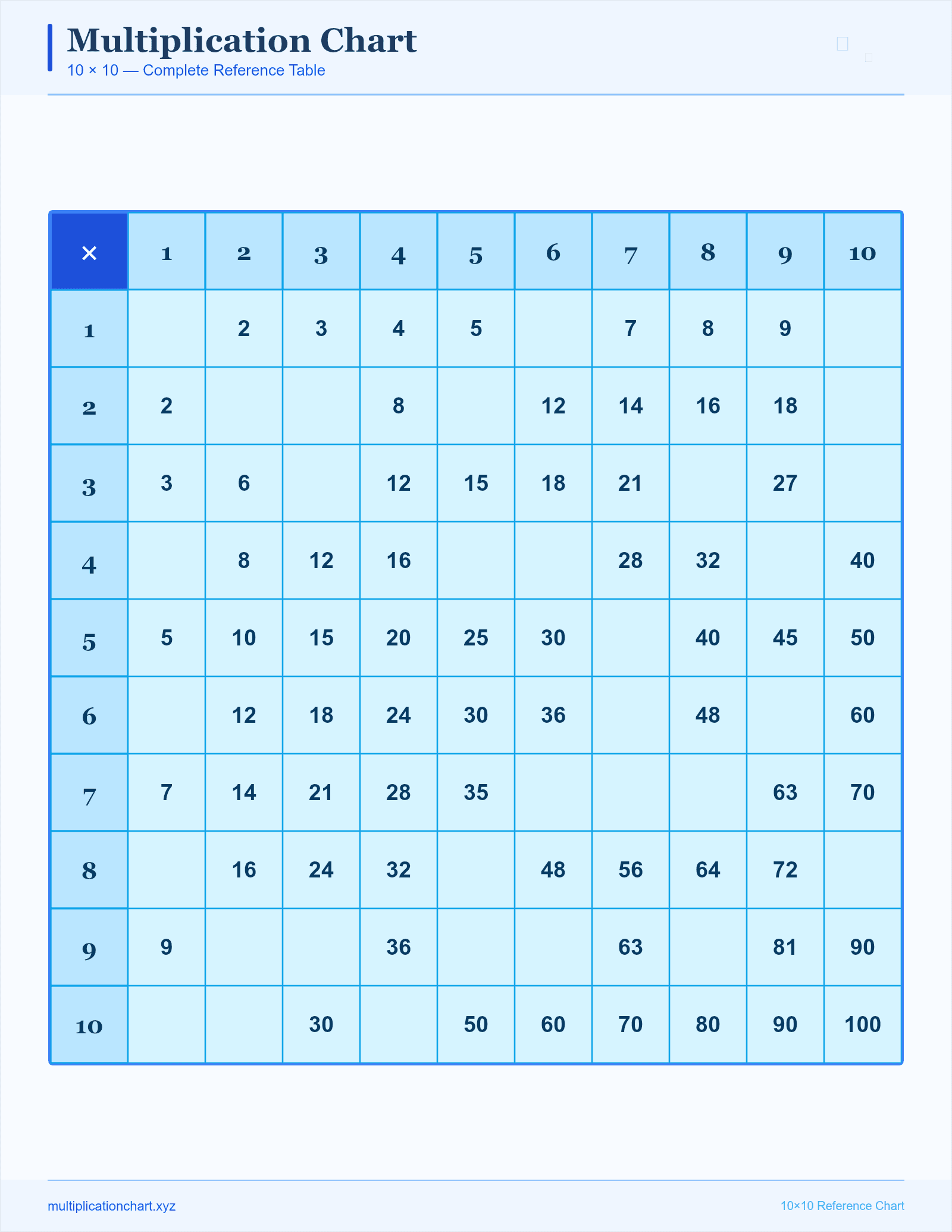
Ocean blue palette with alternating blanks to reinforce 1-10 facts
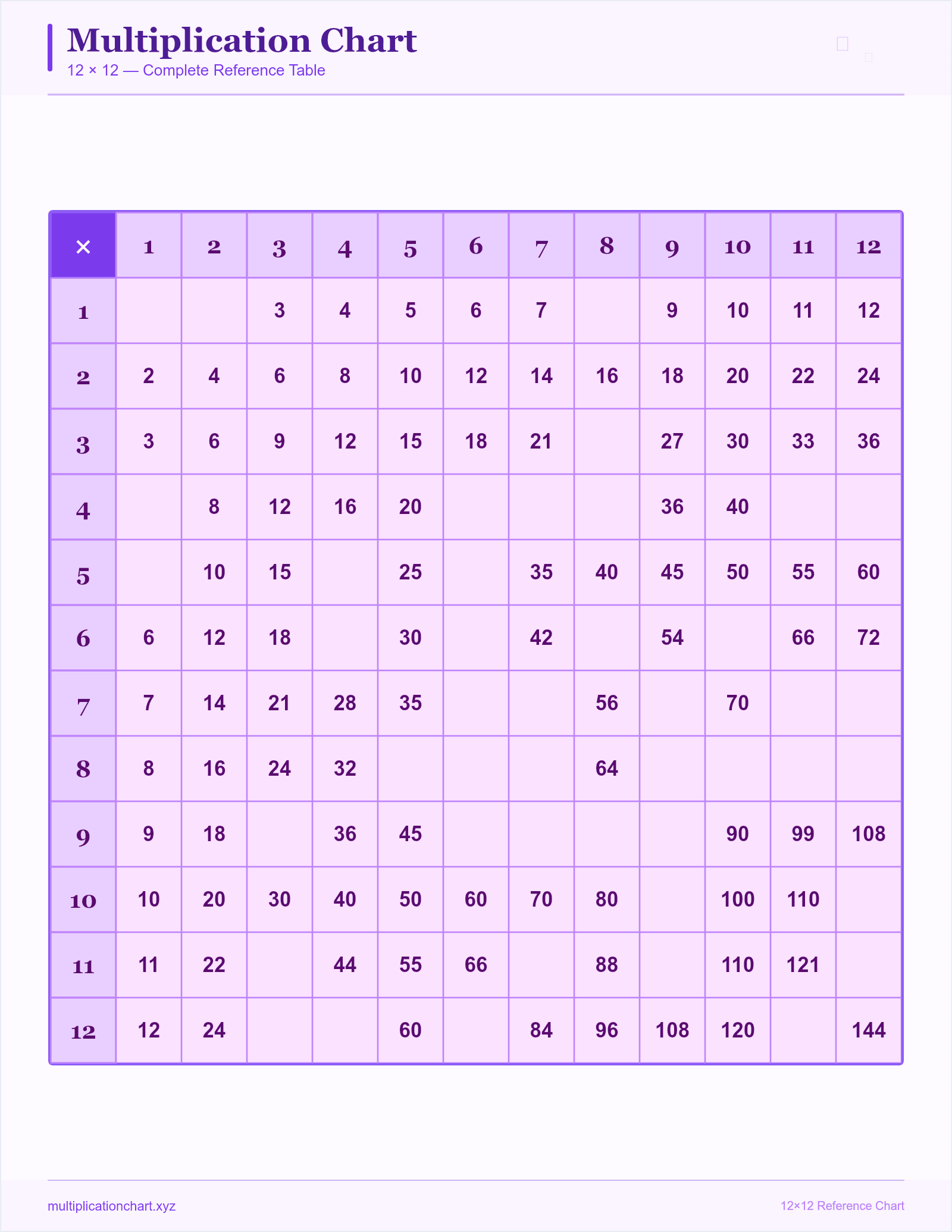
Sunset gradient worksheet with evenly distributed blanks for self-checking
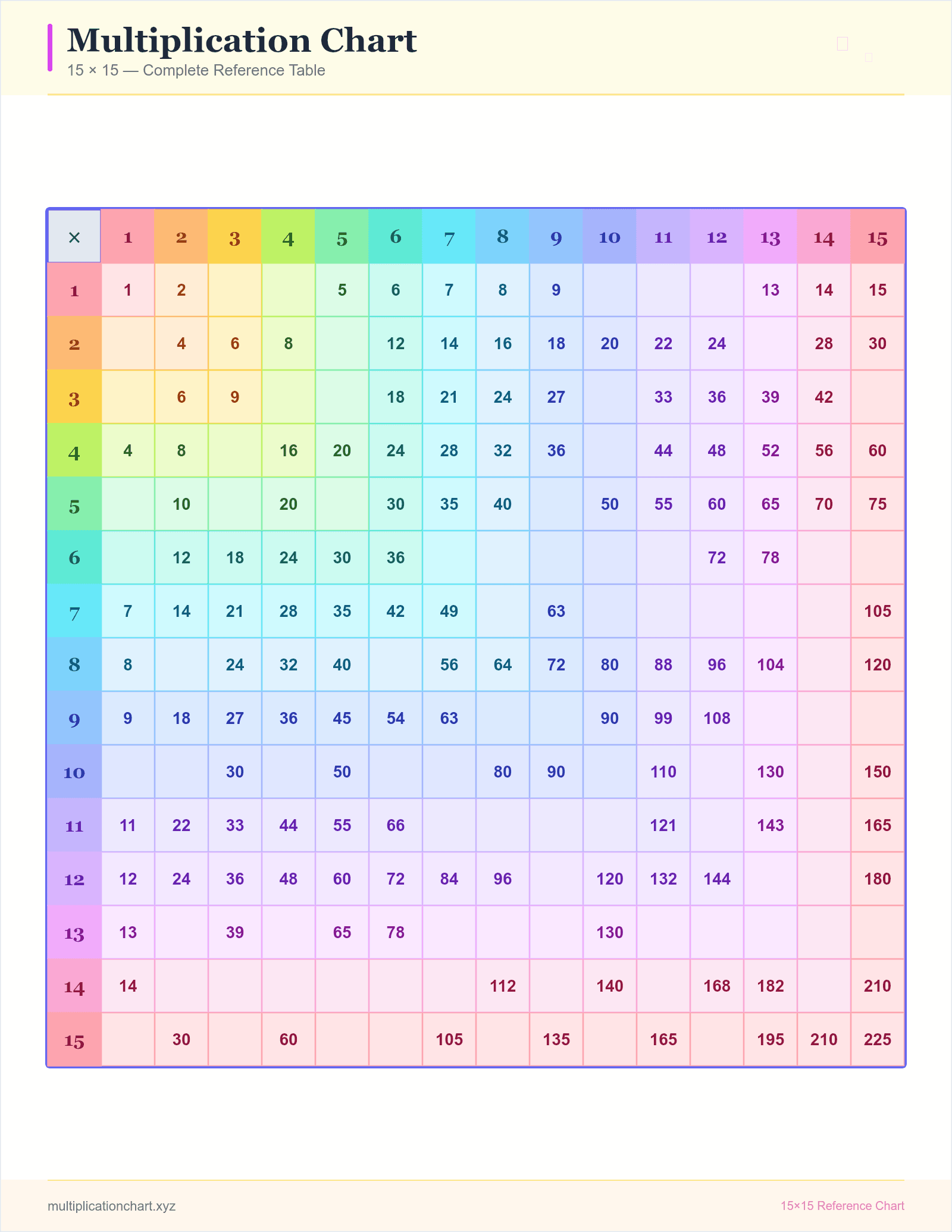
Advanced rainbow drill sheet with 15×15 grid and randomized missing facts
Pattern Recognition
Charts with perfect squares, multiples of 5, and combined patterns highlighted to build number sense and mental math skills.
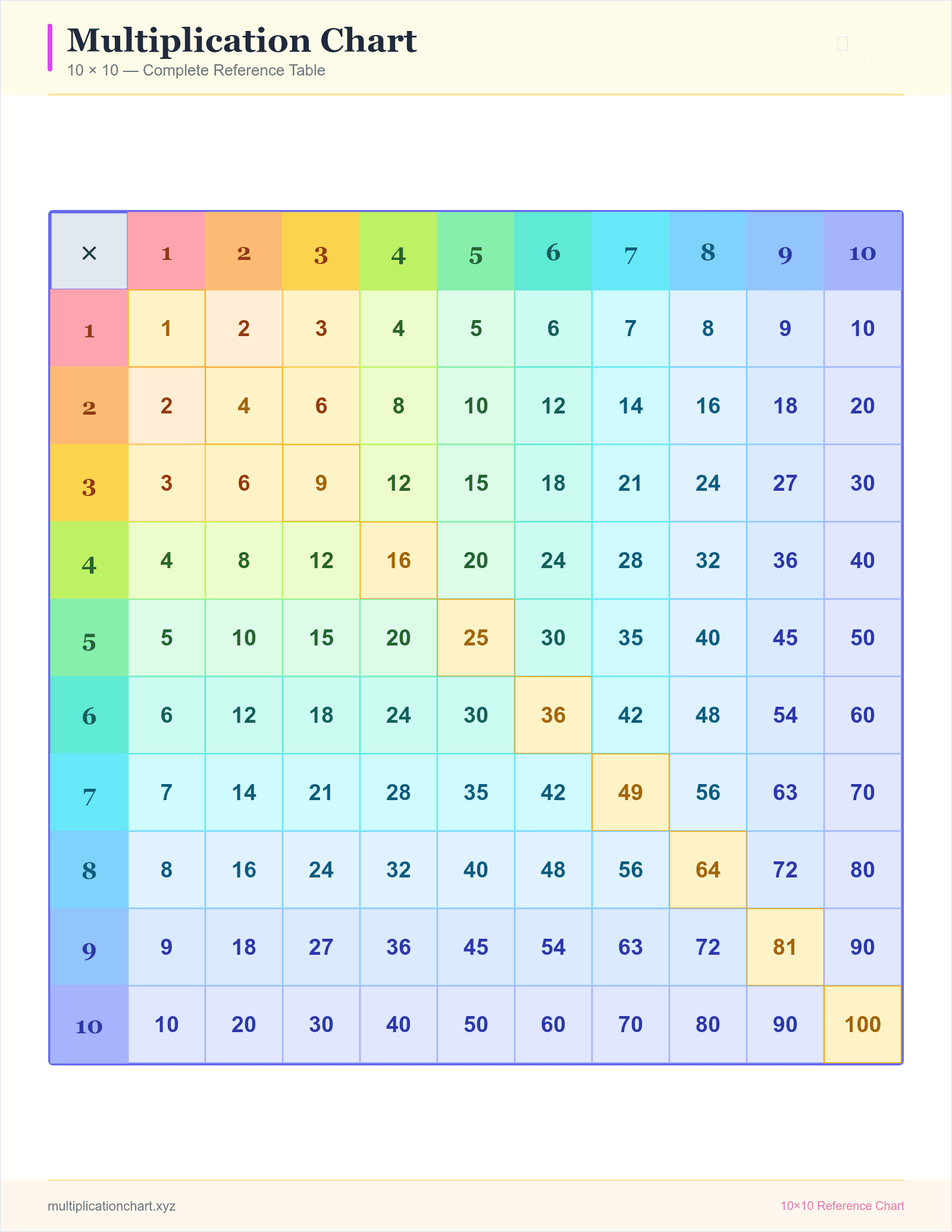
Perfect Squares 10×10 (Rainbow)
PatternsRainbow chart with perfect squares (1, 4, 9, 16...) highlighted for pattern recognition
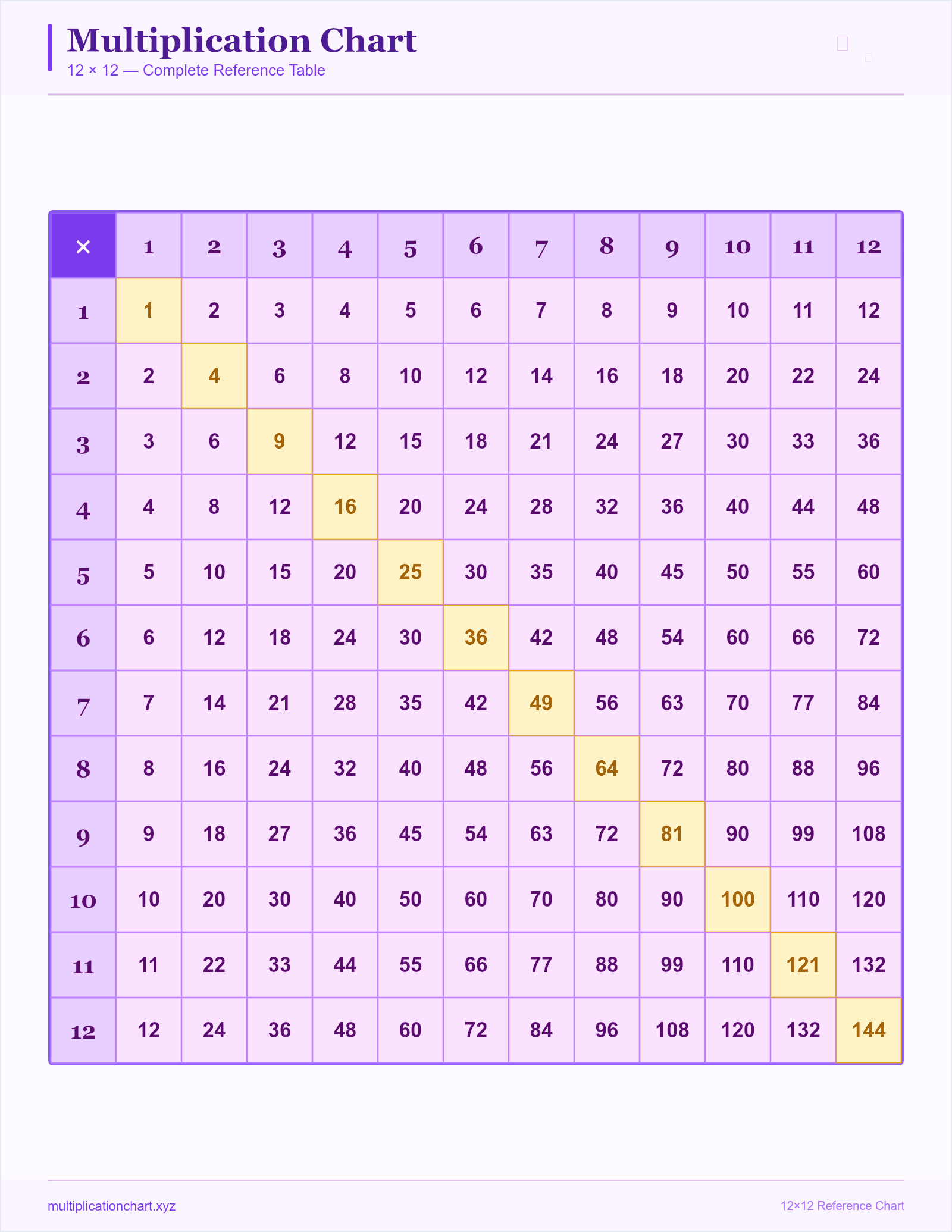
Perfect Squares 12×12 (Sunset)
PatternsBeautiful sunset theme with diagonal perfect squares highlighted for advanced pattern study
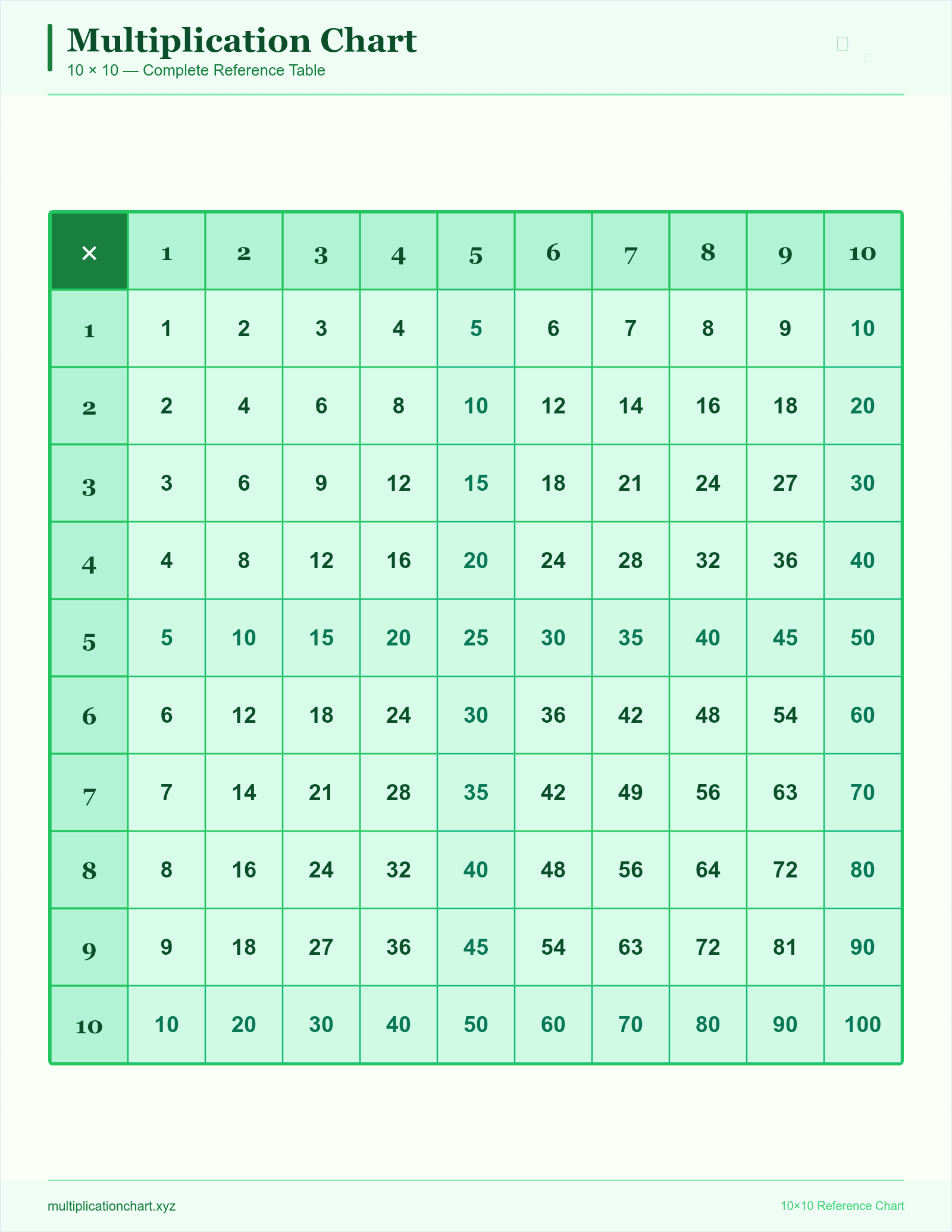
Multiples of 5 (10×10 Forest)
CountingForest green chart with multiples of 5 highlighted for skip counting practice
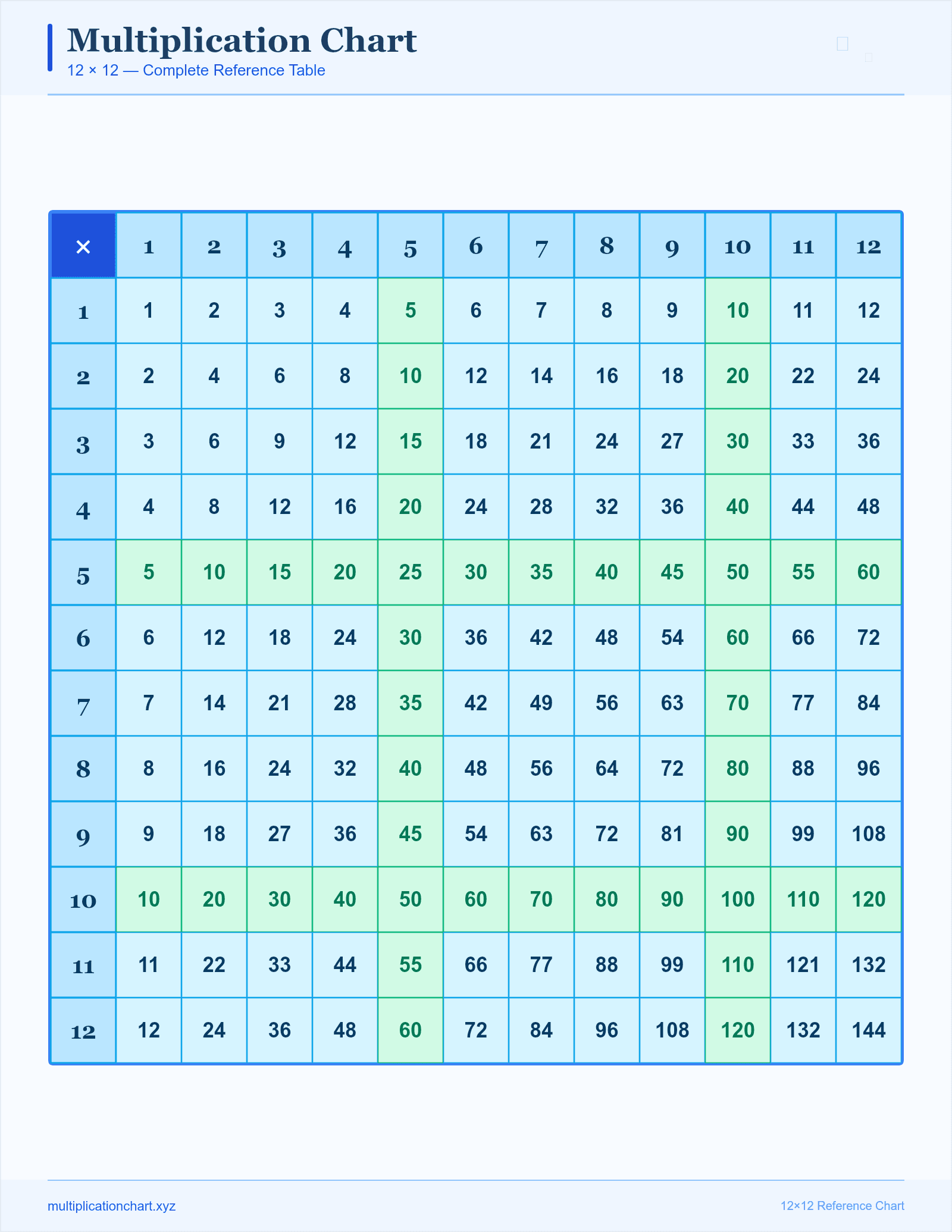
Multiples of 5 (12×12 Ocean)
CountingOcean blue chart highlighting multiples of 5 for mental math practice
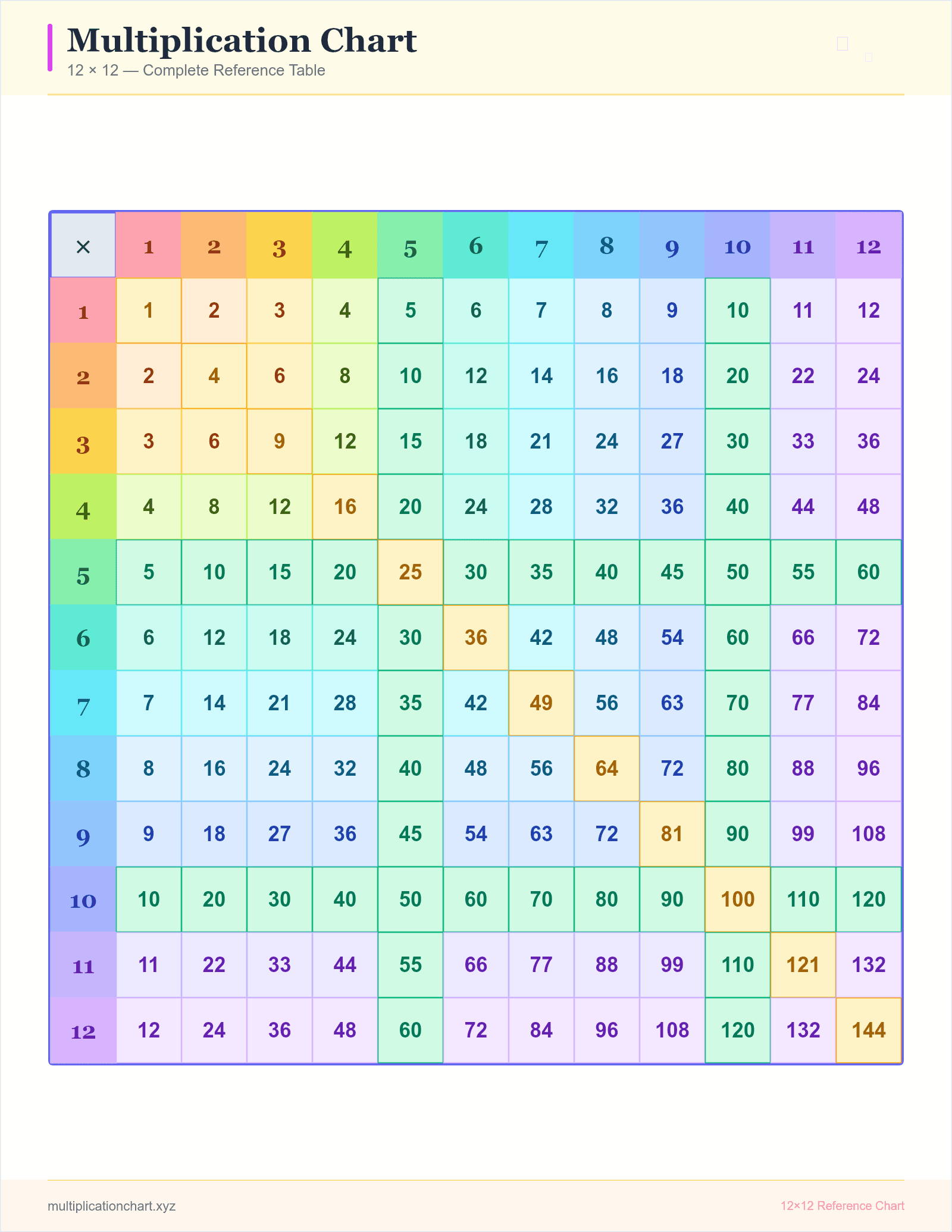
Rainbow chart with BOTH perfect squares and multiples of 5 highlighted for comprehensive pattern learning
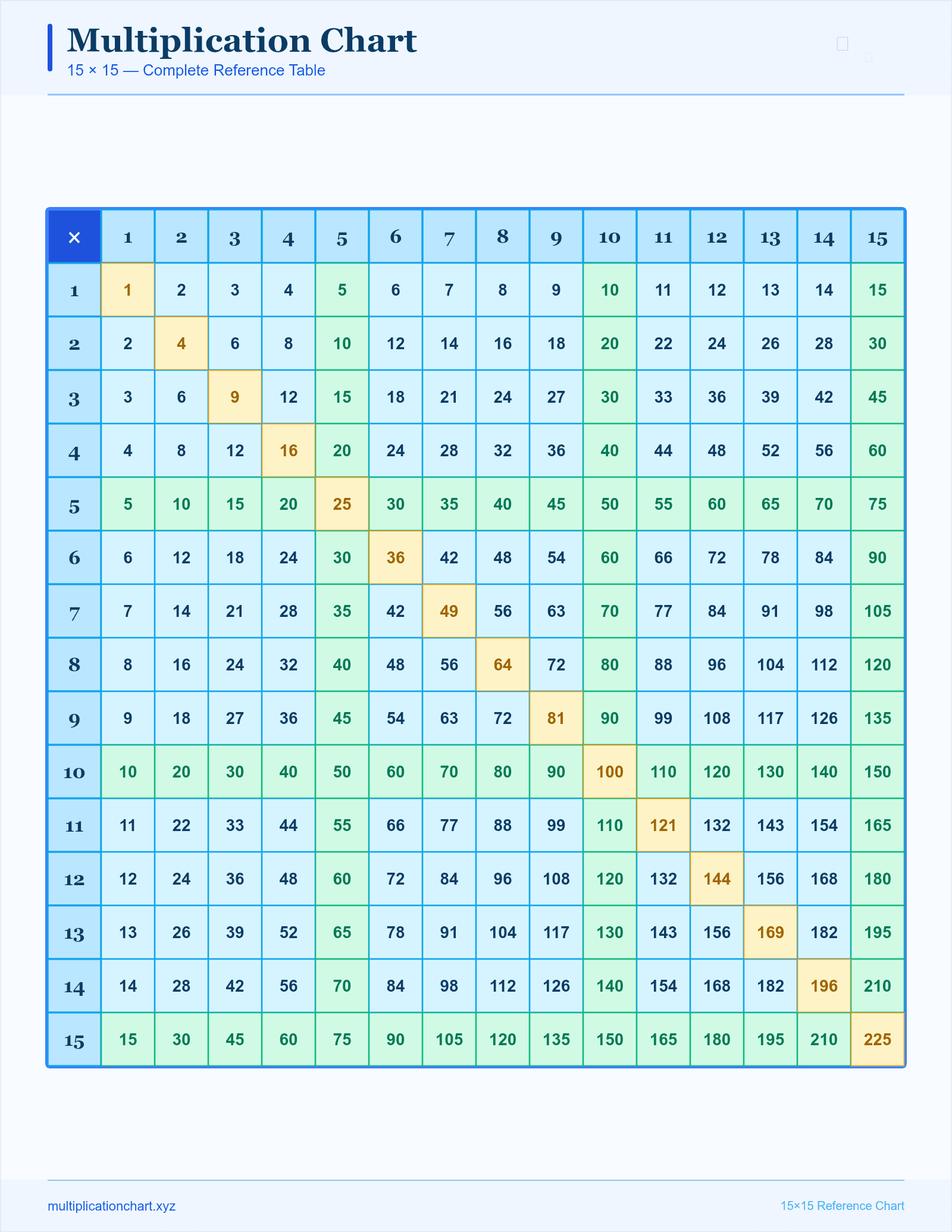
Advanced 15×15 chart with multiple pattern highlights for expert learners
Seasonal & Holiday Charts
Holiday-themed multiplication charts for Christmas, Halloween, Valentine's Day, and back-to-school activities.
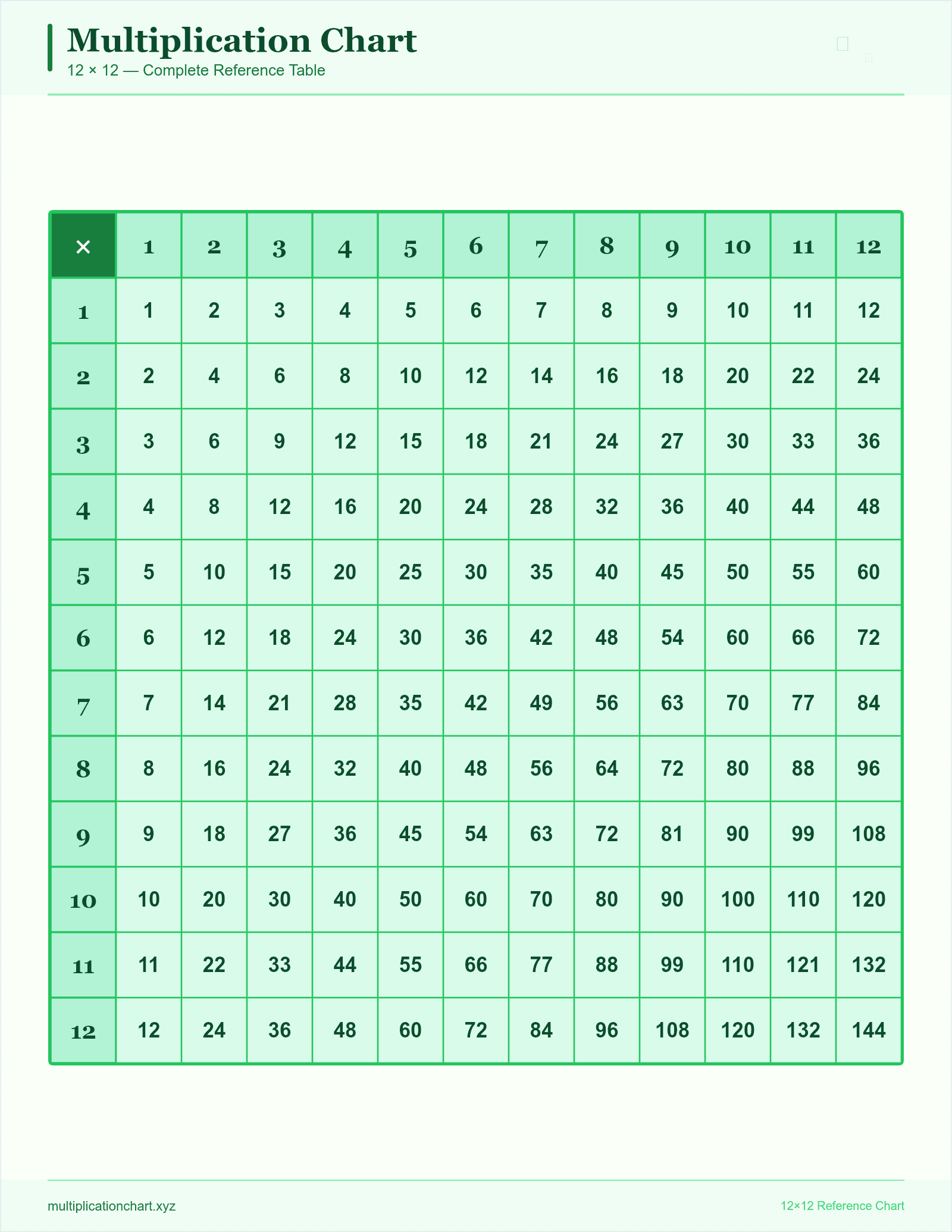
Christmas Green 12×12
HolidayFestive forest green chart perfect for December math stations and holiday homework packets
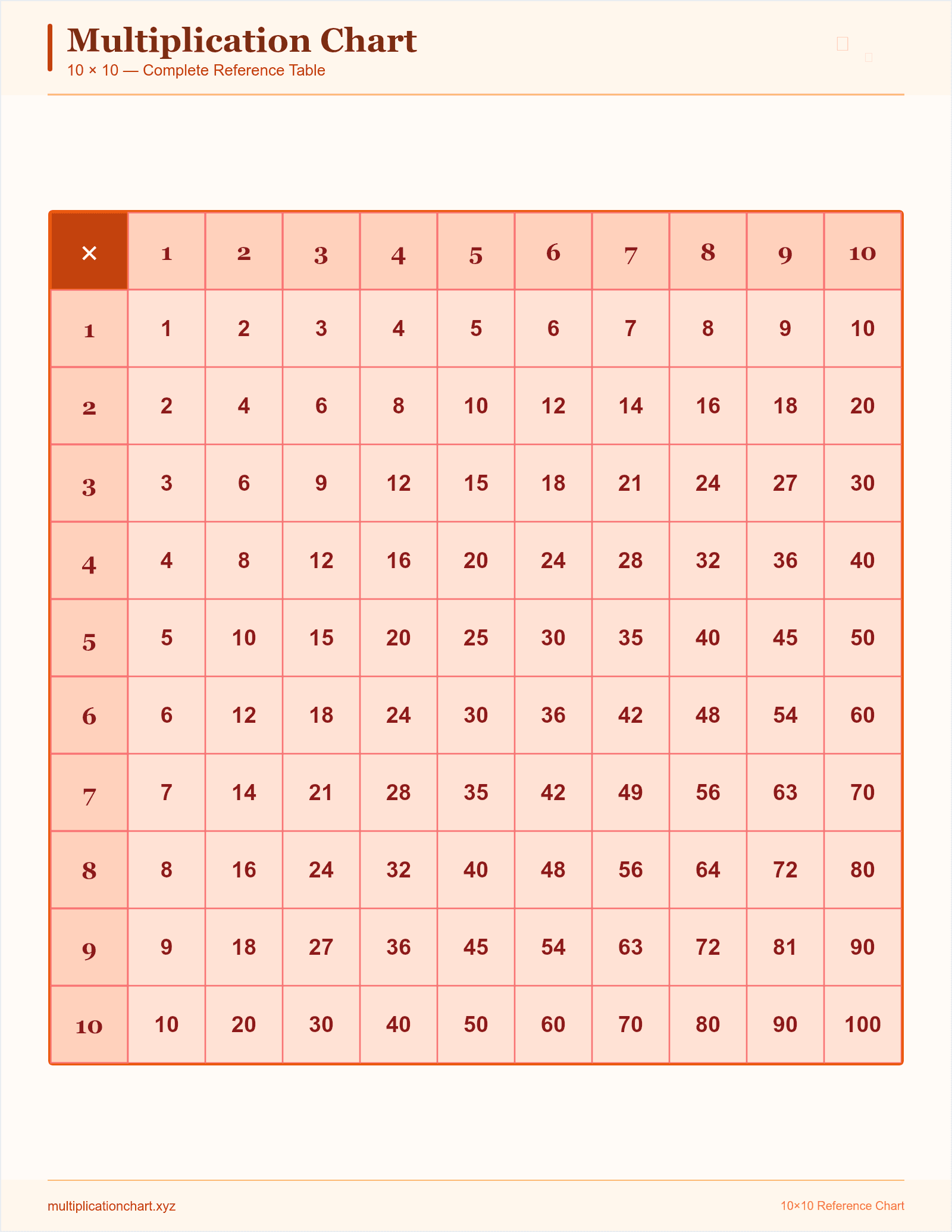
Christmas Red & Gold 10×10
HolidayWarm red-toned chart with cozy holiday vibes for seasonal multiplication practice
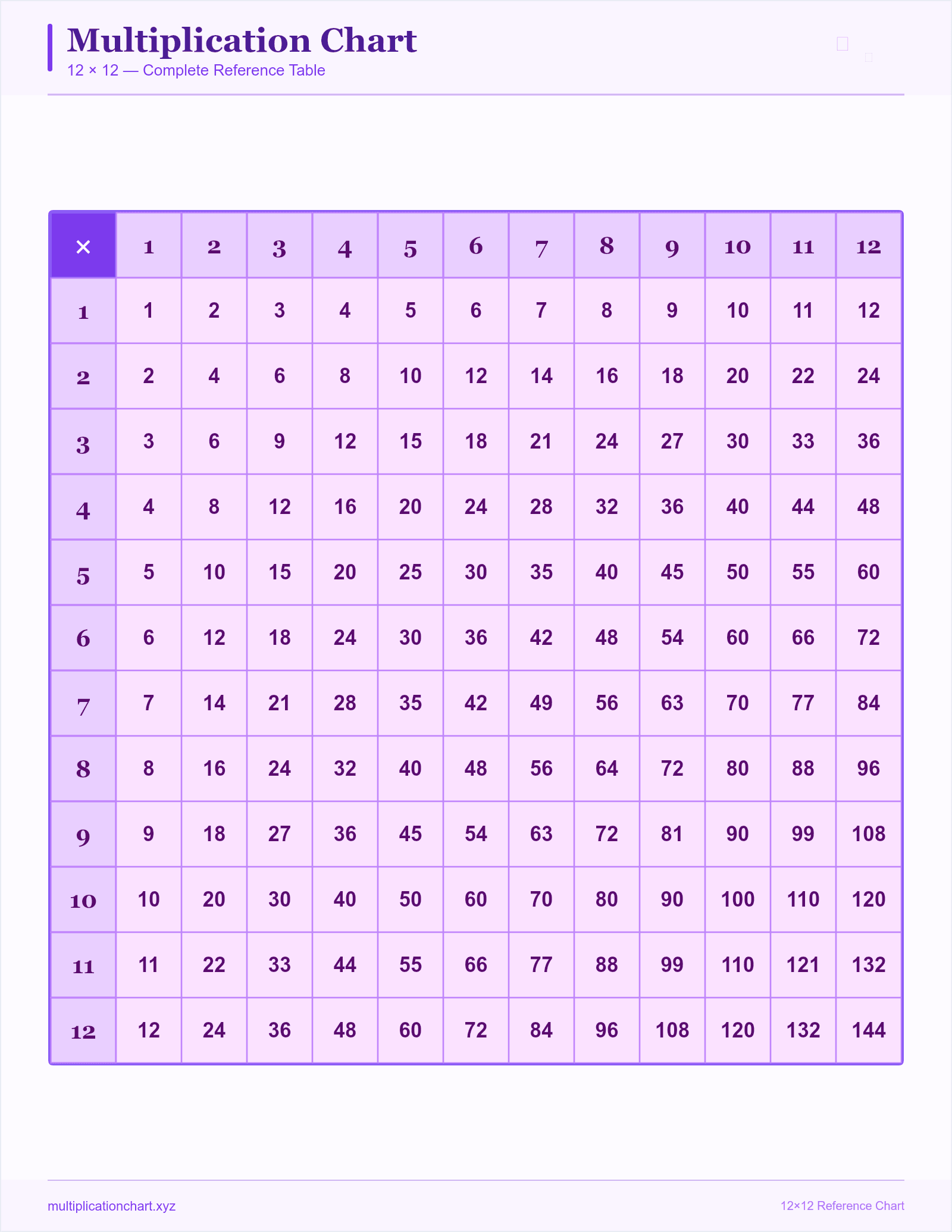
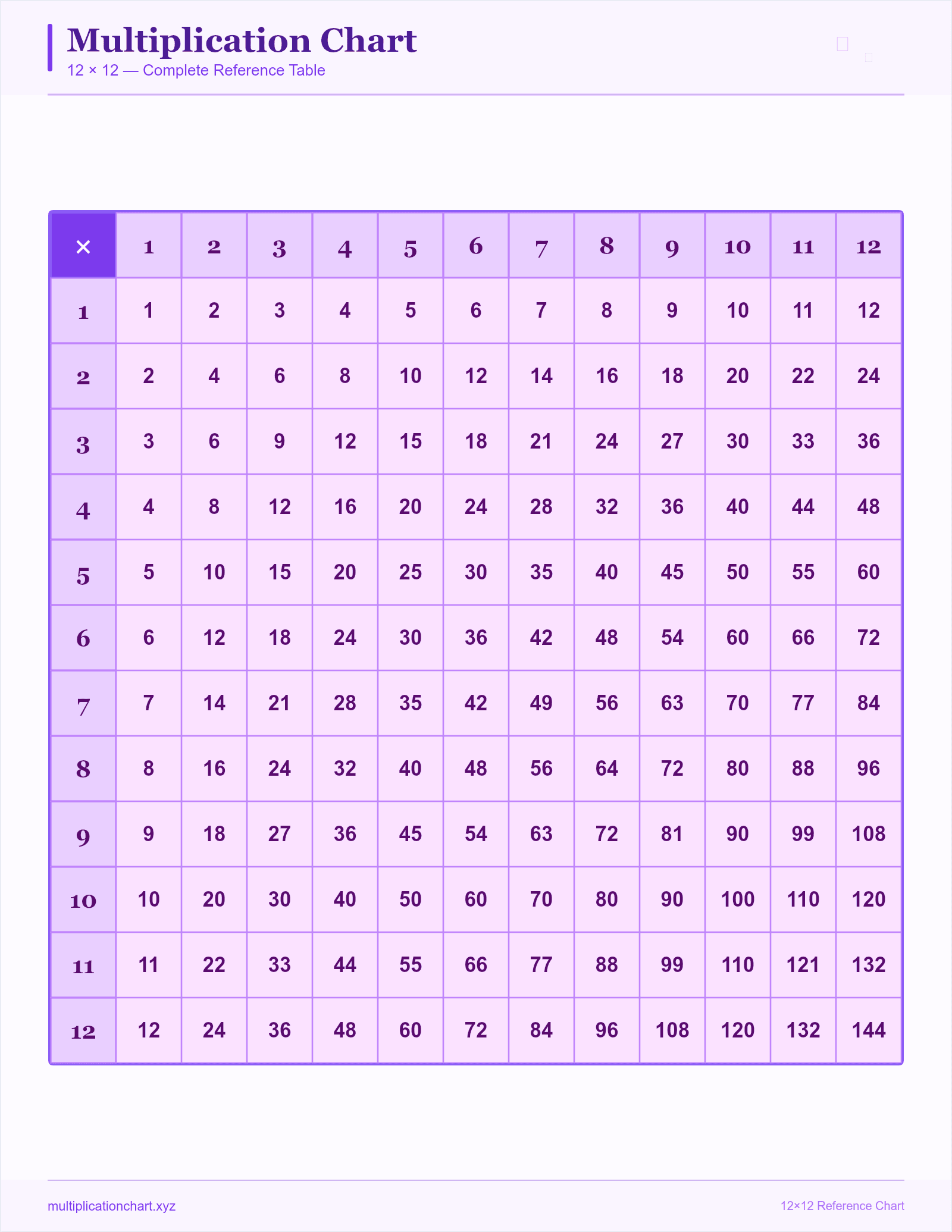
Halloween Purple 12×12
SpookySpooky sunset purple chart for October math activities and Halloween-themed worksheets
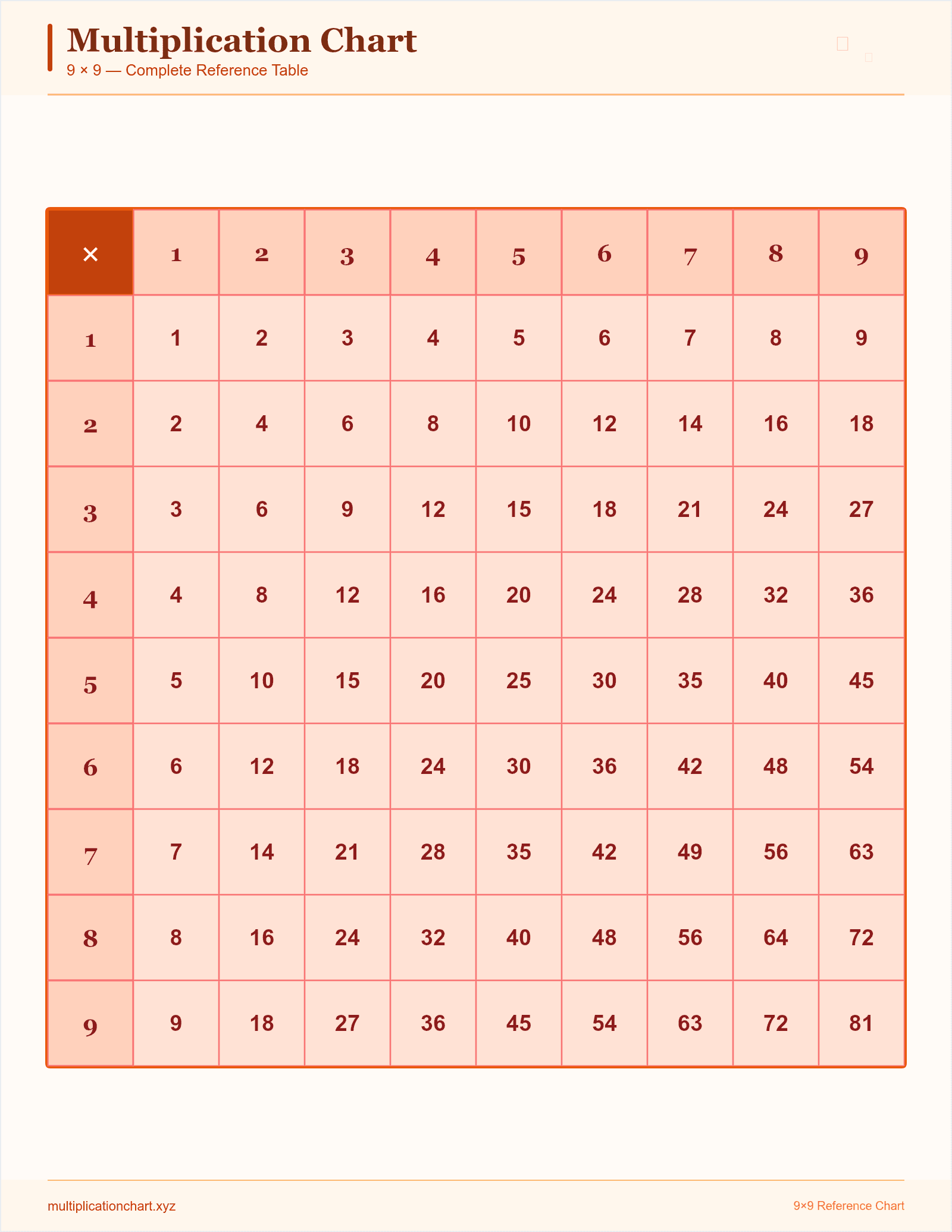
Halloween Orange 9×9
SpookyOrange-toned beginner chart for Halloween math fun — perfect for pumpkin-themed activities
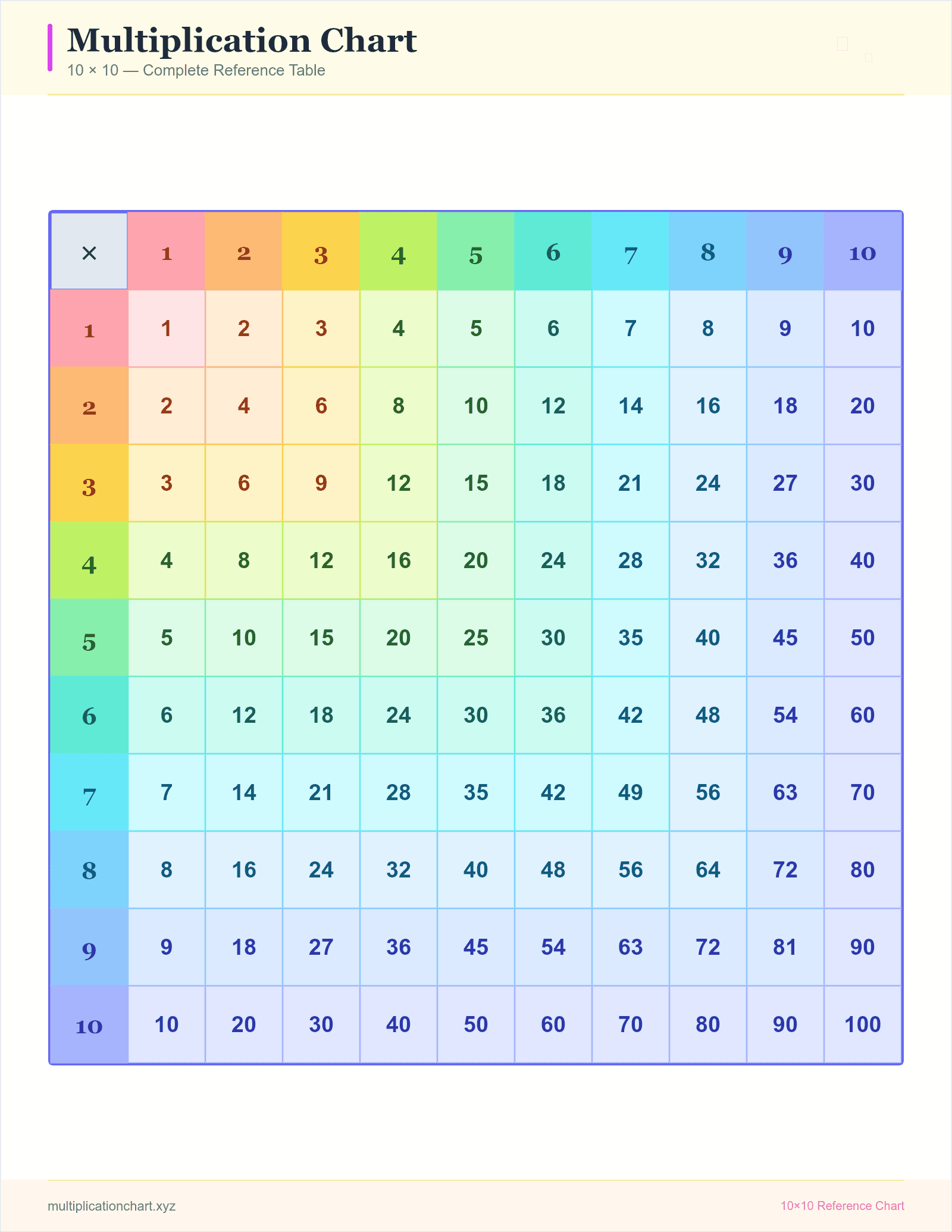
Colorful pink-toned chart for Valentine's Day classroom activities and math centers
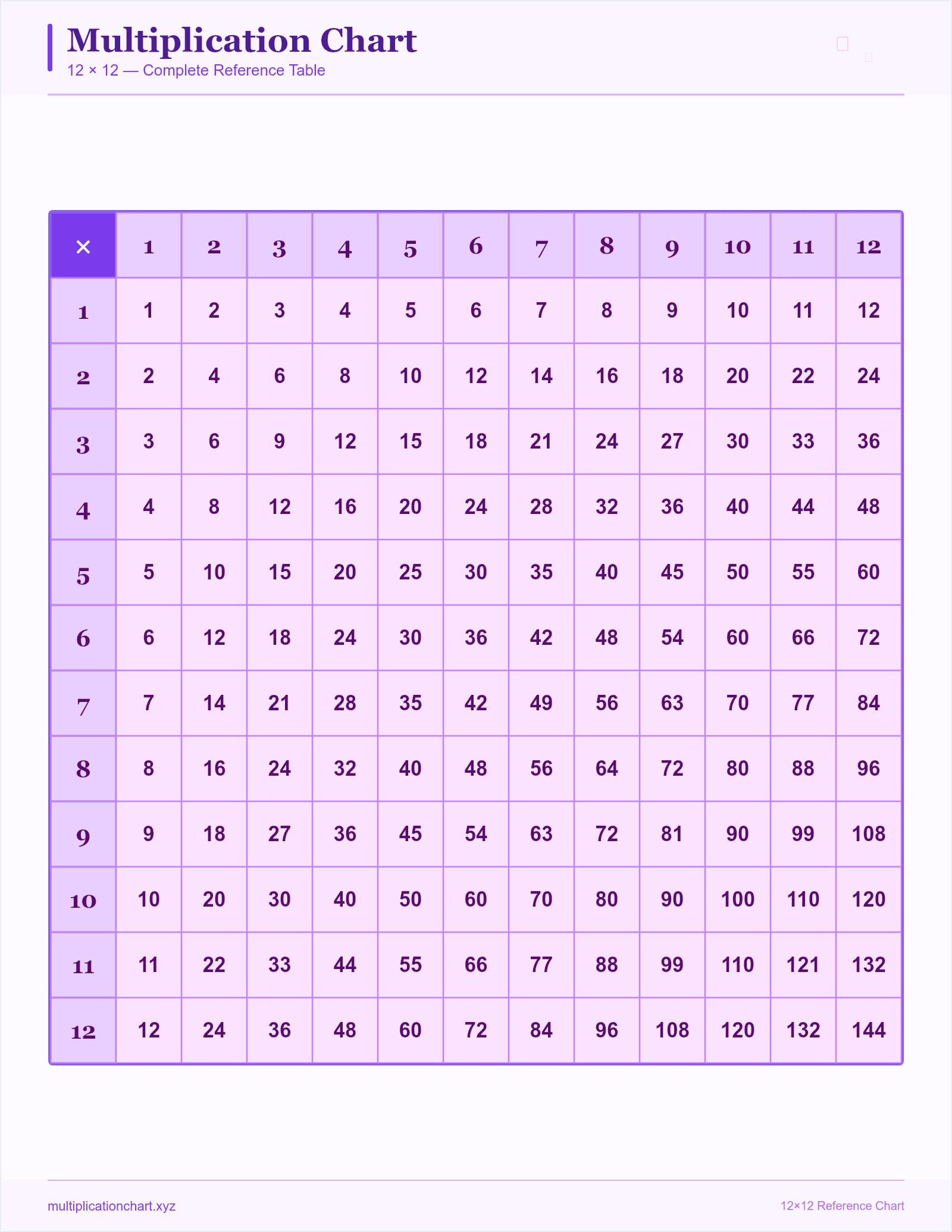
Sweet pink and purple chart for February math practice and Valentine's Day worksheets
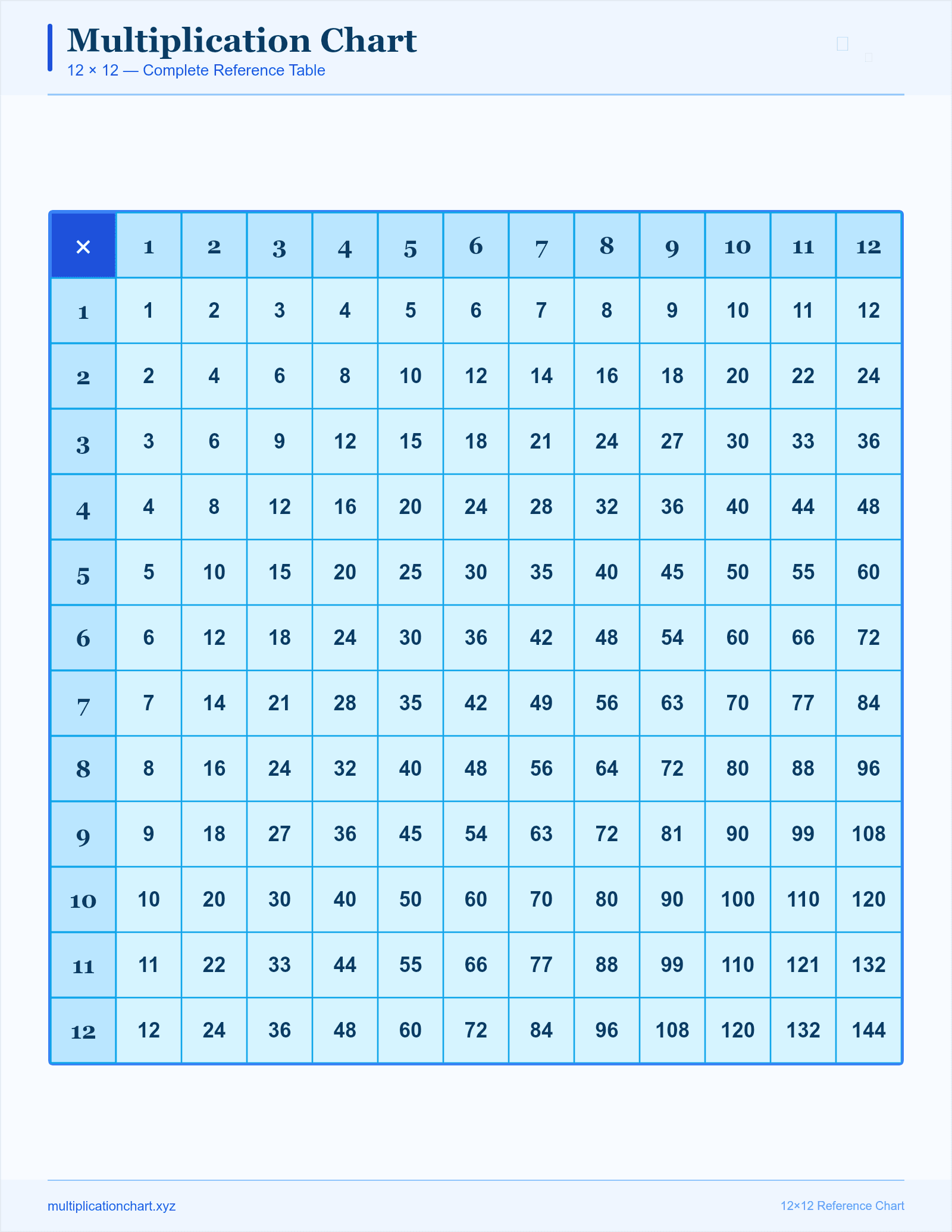
Fresh ocean blue chart for the new school year — great for classroom setup and first-week review
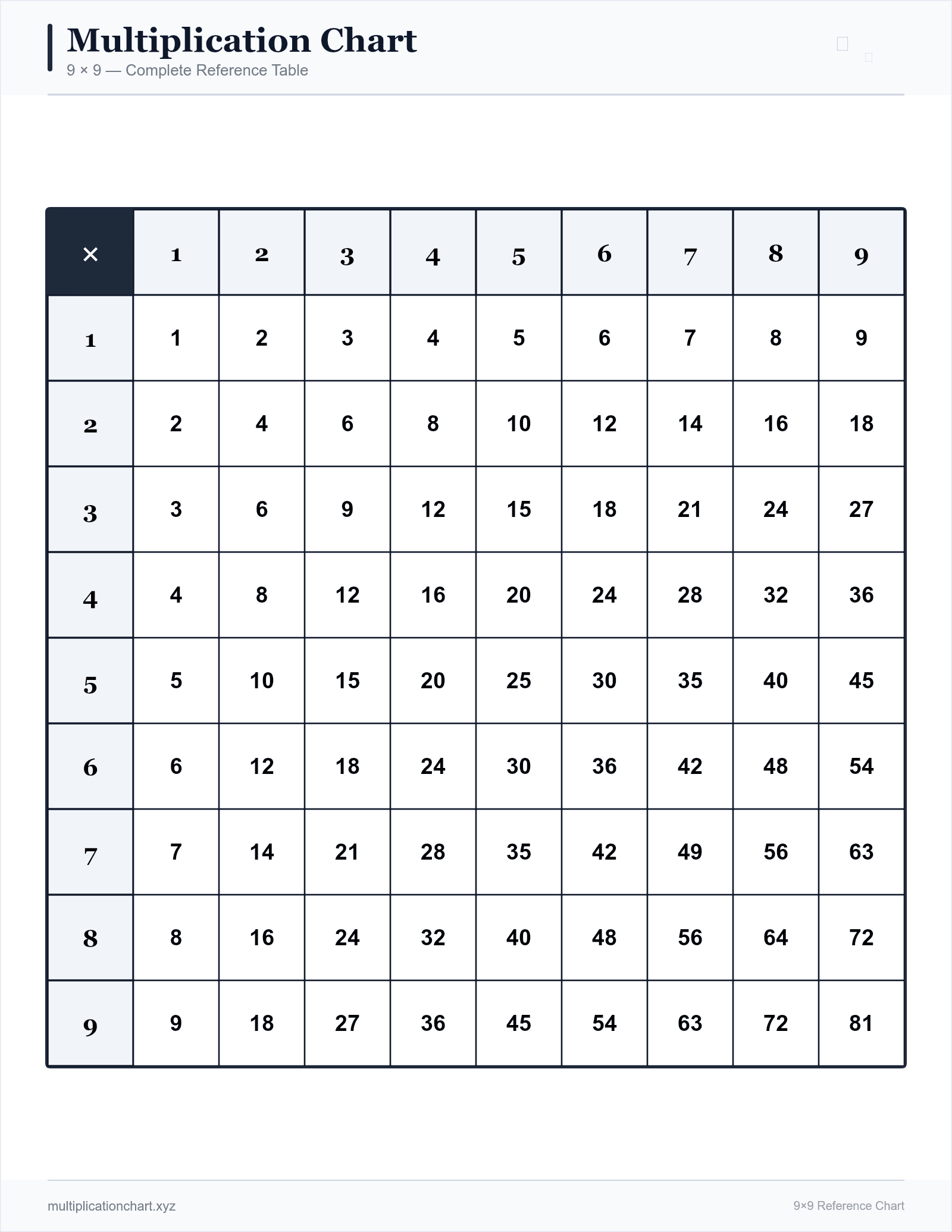
Clean black-and-white chart for day-one desk references and new student packets
Interactive Learning Tools
Beyond charts — hands-on tools that make multiplication practice fun and effective.
Multiplication Wheel
Interactive visual practiceA colorful circular visualization for mastering individual times tables. Pick any number 1–15 and see all its multiples arranged in a petal wheel.
Multiplication Worksheet
Printable practice sheetsGenerate randomized vertical multiplication problems for quizzes, homework, and timed drills. Choose difficulty and download as PNG or PDF.
How to Use a Multiplication Chart
A multiplication chart is a grid where the row and column headers represent the two factors, and each cell shows their product. To find the answer to 7 × 8, locate 7 in the left column and 8 in the top row, then follow both lines until they meet—the cell reads 56. This simple look-up method helps students verify answers quickly while building familiarity with the times tables through repeated exposure.
For the best results, start with a completed chart for reference, then move to blank or partially filled charts for active recall practice. Hang a printed chart near the study area so students can glance at it while working through homework problems. Over time, they will rely on the chart less as facts become automatic.
Recommended Charts by Grade Level
2nd Grade (Ages 7–8)
Begin with a 9×9 chart focused on facts through 9. Use colorful themes like rainbow or warm colors to keep young learners engaged. Concentrate on the 2s, 5s, and 10s tables first—these are the easiest entry points and build confidence before tackling harder facts.
3rd Grade (Ages 8–9)
Move to a 10×10 chart and introduce blank templates for weekly quizzes. Third graders should work on memorizing all single-digit products. Timed drills with randomized fill-in worksheets help build fluency and prepare students for multi-digit multiplication.
4th Grade (Ages 9–10)
The 12×12 chart is the standard for fourth graders. By this stage, students should aim for instant recall of all facts up to 12 × 12. Use charts with highlighted perfect squares to introduce the concept of square numbers and connect multiplication to area models.
5th–6th Grade (Ages 10–12)
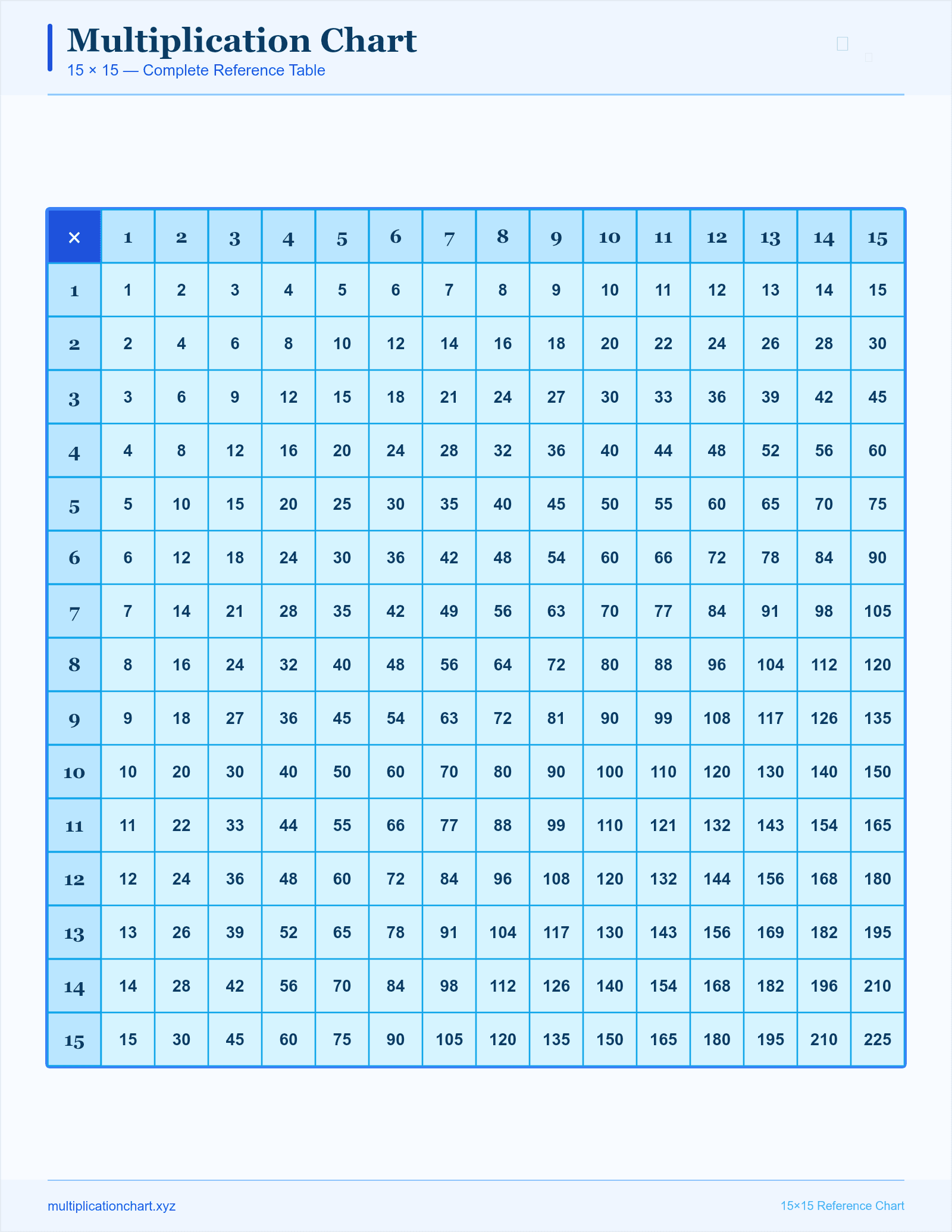
Challenge students with a 15×15 chart to extend their knowledge. Focus on pattern recognition—highlight multiples of 5 and combined patterns. These advanced charts prepare students for fraction work, long division, and pre-algebra concepts.
Teaching Strategies That Work
Skip Counting
Before memorizing isolated facts, have students practice skip counting by 2s, 3s, 5s, and 10s. Highlight an entire row on the chart and read the values aloud—this rhythmic repetition anchors the sequence in memory. Once the pattern feels natural, students can apply it to solve any multiplication problem in that row.
Pattern Recognition
Use the pattern-highlighted charts to show students that multiplication has structure. Perfect squares form a diagonal line across the chart. Multiples of 5 always end in 0 or 5. Products of even numbers are always even. Pointing out these patterns reduces the number of “random” facts a student needs to memorize and builds deeper number sense.
The Doubles Strategy
If a student knows 6 × 4 = 24, they can find 6 × 8 by doubling—since 8 is double 4, the answer is 48. This strategy works for any factor that is double another known factor. Pair this approach with a printed chart so students can check their work and build confidence in the technique.
Commutative Property
Show students that the chart is symmetric: 3 × 7 and 7 × 3 both equal 21. This means they only need to learn roughly half the facts on the chart. Fold the printed chart along the diagonal to demonstrate this visually—each cell matches its mirror image.
Tips for Parents Practicing at Home
- 1.Keep sessions short. Five to ten minutes of focused practice is more effective than a long, frustrating session. Use a blank chart and see how many cells the child can fill before the timer goes off.
- 2.Print multiple copies. Download several blank worksheets and keep them in a folder. Having fresh sheets ready lowers the barrier to practice and lets kids see improvement over time.
- 3.Celebrate progress, not perfection. Track how many facts the child gets right each week. Even going from 80 to 90 correct answers on a 12×12 blank chart is meaningful progress worth recognizing.
- 4.Make it visual. Post a colorful completed chart on the fridge or near the homework area. Constant passive exposure helps facts sink in, even outside of dedicated practice time.
- 5.Use real-life examples. Point out multiplication in everyday situations—arranging items in rows, calculating prices, or sharing snacks equally. Connecting math to real life makes the chart feel useful rather than abstract.